There is a moment that every new parent knows. You are standing in the middle of your living room, nursery freshly painted, crib assembled, and tiny onesies folded in perfect rows — and then it hits you like a freight train: this house is basically an obstacle course of sharp corners, wobbly furniture, and open electrical outlets.
That wave of “nesting before baby arrives” is completely normal. But here is the thing — the urge to create a child-safe home environment does not have to turn into full-blown panic. Baby proofing a home is a process, not a single afternoon project, and with the right room-by-room guide, it is absolutely manageable.
So when should you start baby proofing your home? Ideally, begin before your baby arrives or no later than the four-to-five month mark. Most babies begin crawling between six and ten months, and hazard prevention for babies at home needs to be in place before they reach that milestone — not after your little one has already discovered the cabinet under the sink.
It is also worth understanding the difference between baby proofing (focused on infant safety for crawlers and early walkers) and toddler-proofing (managing the chaos of active climbers who can scale a bookshelf like a tiny Spiderman). This guide covers both stages, walking you through every major room so you have a complete baby proofing checklist you can actually use.
Let’s get started.
Section 1: The Ultimate Baby Proofing Checklist — Start Here
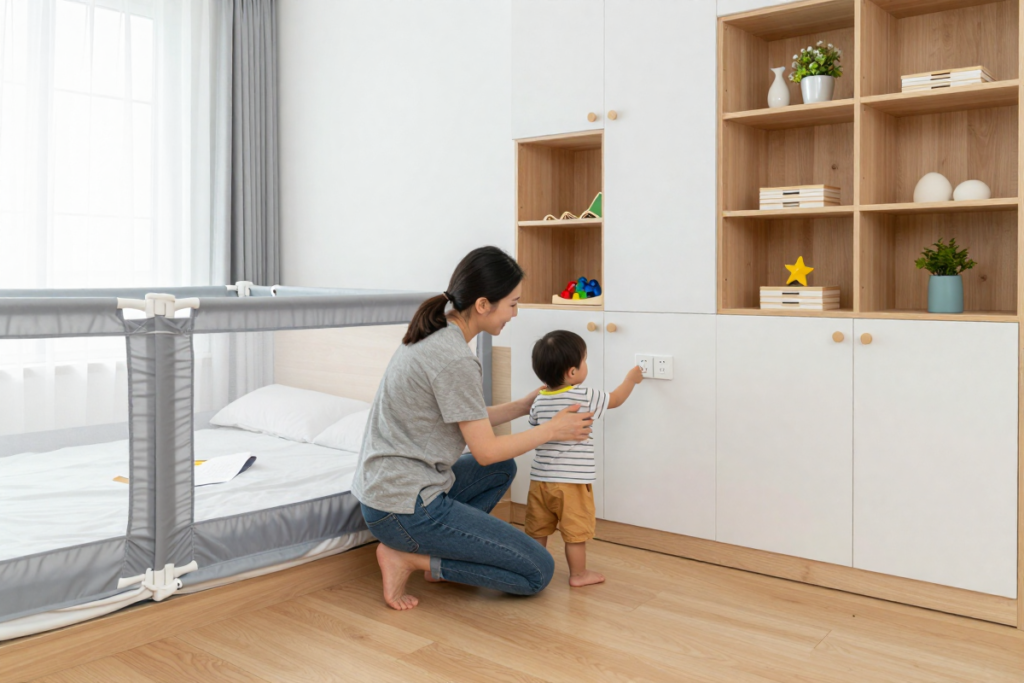
Before you tackle individual rooms, do this first: get down on your hands and knees. Seriously. Crawl through your home at baby eye level and you will immediately spot dangers that are completely invisible from adult height — dangling cords, forgotten coins on the floor, unstable furniture legs. This simple perspective shift is the single most effective first step in any childproofing walkthrough.
Once you have done your floor-level survey, address these universal hazards throughout your entire home:
⚡ Electrical Outlets
Babyproofing electrical outlets is non-negotiable. There is an ongoing debate between two popular options:
- Plug-in outlet covers are cheap and easy to install but can actually become choking hazards if a curious toddler manages to pull them out (and they will try).
- Self-closing baby proof electrical outlet covers (also called sliding outlet covers) replace the existing outlet plate and automatically cover the slots when nothing is plugged in. These are widely considered the safer, more convenient long-term solution.
📌 [RECOMMENDED: Self-closing sliding outlet covers]
🪑 Furniture Anti-Tip Straps
Tip-over accidents are one of the leading causes of child injury at home. Dressers, bookshelves, and TV stands can topple with surprisingly little force. Learning how to anchor furniture to the wall for baby safety using heavy-duty anti-tip furniture straps is one of the most important steps you can take — and most parents overlook it entirely.
📌 [RECOMMENDED: Heavy-duty anti-tip furniture anchor straps]
🔪 Sharp Edges and Corners
Baby proofing sharp edges on coffee tables, hearths, and low shelving with foam corner and edge bumpers is a quick win that prevents some of the most common minor injuries.
📌 [ALL-IN-ONE SOLUTION: Universal baby proofing kit (includes corner guards, outlet covers, cabinet locks)]
Section 2: Room-by-Room Safety Breakdown
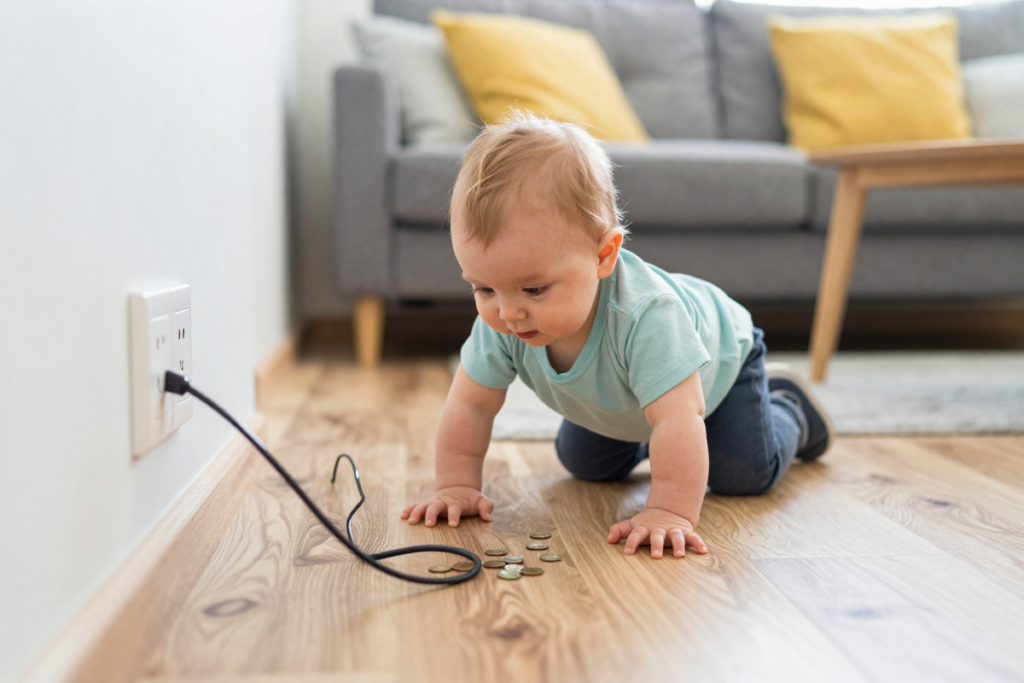
A. The Living Room & Common Areas: Where Life Happens
The living room sees the most daily activity, which means it also holds the most daily hazards.
The Entertainment Center & TV Flat-screen TVs are top-heavy and surprisingly easy for a baby to pull down. Learning how to baby proof a TV stand starts with securing the TV itself using TV safety straps anchored to the wall or the back of the entertainment unit. Bundle and hide electrical cords inside a cable management box or power strip cover to eliminate both strangulation and electrical hazards in one move.
📌 [GET HERE: TV anti-tip safety straps ] 📌 [Baby proof power strip cover ]
Sharp Edges and Corners That gorgeous mid-century modern coffee table? Pure danger zone. The best approach to baby proofing coffee table sharp corners is applying thick foam corner protectors for babies to every low edge and point. Look for products with strong adhesive backing and rounded foam (not thin plastic) for the best impact absorption.
📌 [RECOMMENDED: Furniture edge and corner bumper guards]
The Fireplace Baby proofing a fireplace hearth requires two layers of defense: a hearth gate or freestanding fireplace safety fence to keep your baby away from the structure entirely, plus foam hearth padding to cushion the hard raised ledge in case of tumbles. When the fireplace is in use, treat it as you would a pool — no exceptions for unsupervised access.
📌 [RECOMMENDED: Fireplace hearth gate/safety fence]
Windows and Blinds Blind cord safety is a serious and underappreciated danger. Looped cords on older blinds pose a strangulation risk. The simplest solution: swap to cordless blinds for baby safety throughout your home. If replacing blinds is not in the budget right now, install cord wind-ups or cord shorteners immediately. For windows, add window stops or window guards for child safety that prevent the window from opening more than four inches while still allowing ventilation.
B. The Kitchen: Managing High-Value Hazards
The kitchen is arguably the most dangerous room in the house for babies and toddlers. The goal here is not to ban your child from the kitchen, but to create clear boundaries and layers of protection.
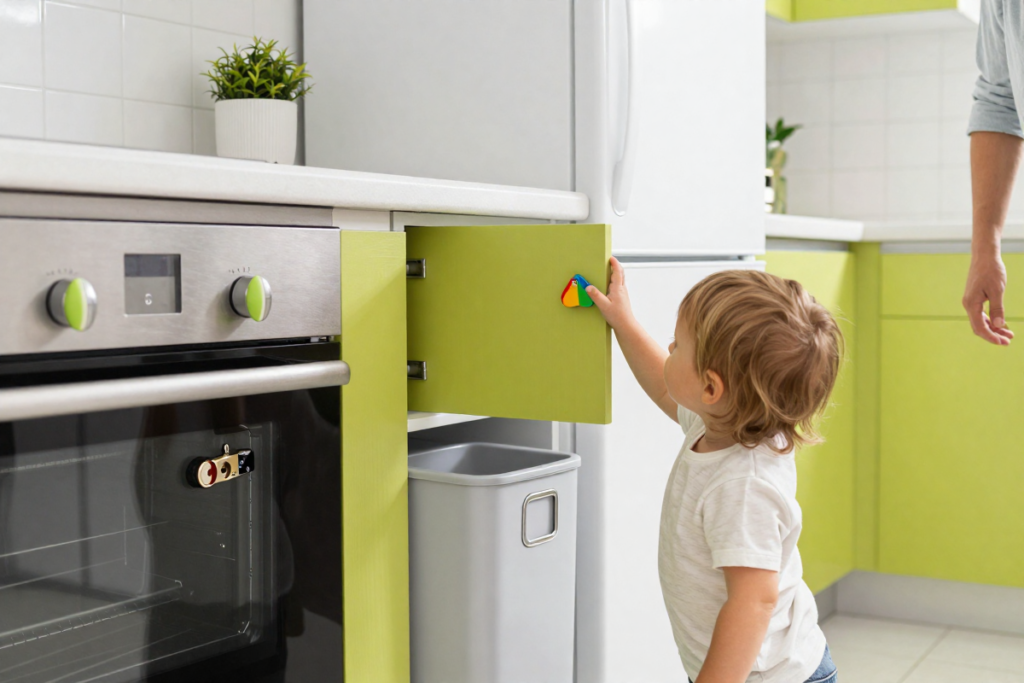
Cabinetry and Drawers This is the question every parent — especially renters — asks: how do I baby proof kitchen cabinets without drilling? Good news: you have solid options.
- Magnetic cabinet locks are installed inside the cabinet door and are invisible from the outside. They require a magnetic key to open and are extremely difficult for toddlers to defeat. Most require minimal drilling.
- Adhesive spring locks are the true no-drill solution and work well for renters, though they are slightly less robust against a determined toddler.
For the under-sink cabinet — which typically stores household chemicals and cleaning products — magnetic locks are strongly recommended as the more secure option for poison prevention.
📌 [RECOMMENDED: Magnetic cabinet lock set — replace with affiliate link]
The Stove and Oven Install stove knob covers to prevent your baby from accidentally turning on a burner (it happens more often than you would think). For the oven, an oven door guard creates a heat barrier and prevents tiny hands from pulling the door open.
📌 [RECOMMENDED: Stove knob covers — replace with affiliate link]
Appliances and the Trash Can A baby proof refrigerator lock and dishwasher lock sound over-the-top until your one-year-old has emptied an entire shelf of condiments onto the kitchen floor. Securing the kitchen trash can — either with a locking lid trash can or by moving it inside a locked cabinet — also eliminates a surprising number of hazards including choking risks and exposure to harmful materials.
C. The Bathroom: Slip, Splash, and Chemical Safety
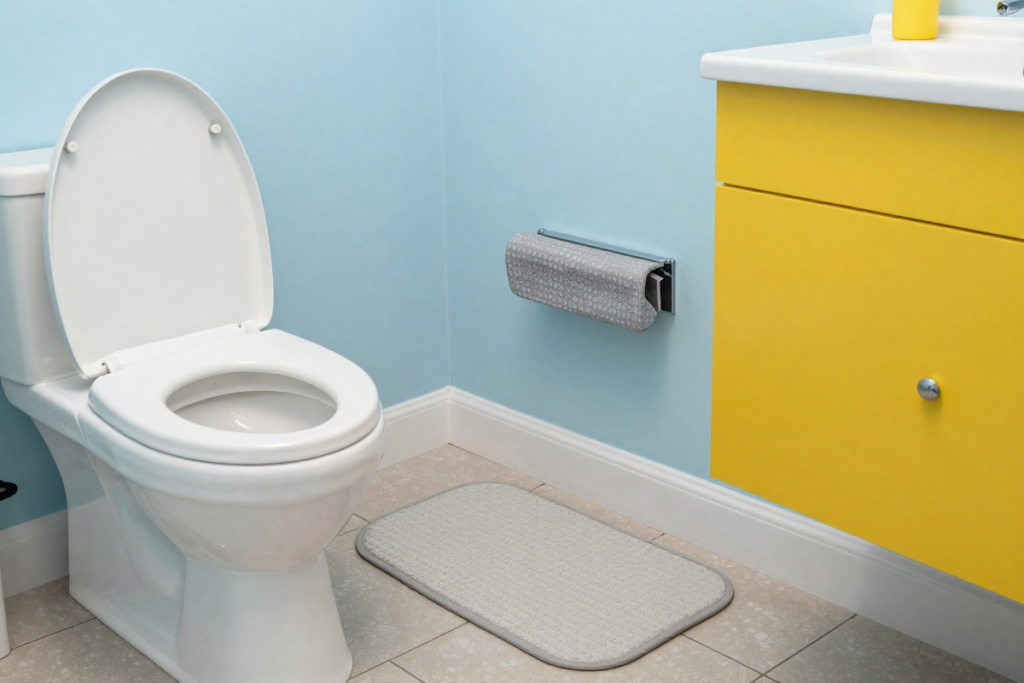
Baby proofing the bathroom is all about layering protections for three primary hazards: drowning, slipping, and accidental poisoning.
The Toilet A baby proof toilet lid lock is one of the most important — and most skipped — safety items on this list. Babies and toddlers can drown in just a few inches of water, and an unsecured toilet lid is an open invitation for exploration. This one is genuinely non-negotiable.
📌 [GRAB THIS HERE: Toilet lid lock]
The Bathtub For bath time safety: set your hot water heater temperature to 120°F or lower to prevent scalding. Add a non-slip bath mat for baby safety inside the tub, and cover the hard metal faucet with a soft bathtub faucet cover to cushion accidental head bumps.
📌 [RECOMMENDED: Bathtub faucet cover] 📌 [Non-slip bath mat]
The Medicine Cabinet Installing a medicine cabinet lock is essential for poison prevention for toddlers at home. Even vitamins and seemingly harmless over-the-counter medications can be dangerous in small hands. Keep all medications — including those in your purse or a guest’s bag — completely out of reach.
📌 [TRY THIS: Medicine cabinet lock]
D. Stairs and Hallways: The Gravity Zones
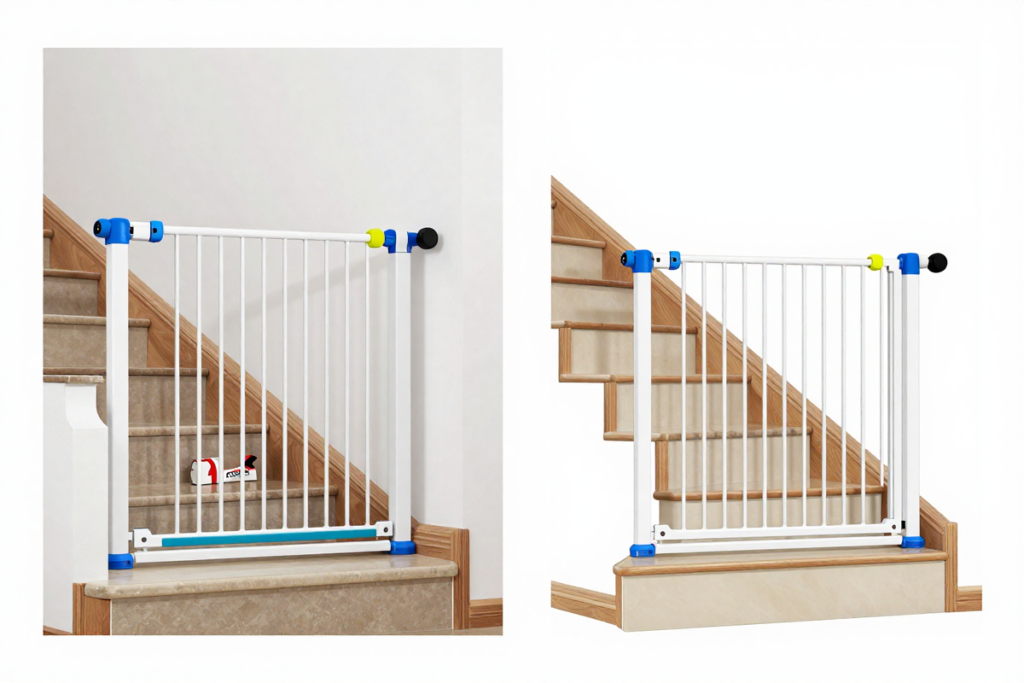
Falls on stairs are one of the most common causes of serious injury for babies and toddlers. Baby gate placement and type matter enormously here.
Top of the Stairs This is the most critical gate location in the home. You must — must — use a hardware-mounted baby gate at the top of the stairs. Hardware-mounted gates are drilled directly into the wall or banister and cannot be pushed out of place. If you are searching for the best baby gate for the top of stairs, only consider hardware-mounted models. No exceptions.
⚠️ Safety Warning: Pressure-mounted gates should NEVER be used at the top of stairs. They can be pushed out of the doorframe by a child leaning against them, creating a dangerous fall risk.
📌 [GREAT OPTION HERE: Hardware-mounted top-of-stairs baby gate]
Bottom of Stairs and Wide or Irregular Openings For the bottom of stairs, wide hallways, or open floor plan areas, pressure-mounted baby gates and retractable baby gates for wide openings are excellent options. Retractable gates are particularly useful for irregular staircases or unusually wide spaces where standard gates do not fit.
📌 [RECOMMENDED: Retractable baby gate for wide openings]
Doors Add childproof door knob covers to any doors leading to hazardous areas like the garage or laundry room. For lever-style handles (which are actually easier for toddlers to operate than round knobs), install door lever handle locks. Finally, use door finger pinch guards on all interior doors — those door hinges are one of the most painful and common toddler injuries, and one of the easiest to prevent.
E. The Nursery: Safe Sleep and Quiet Play
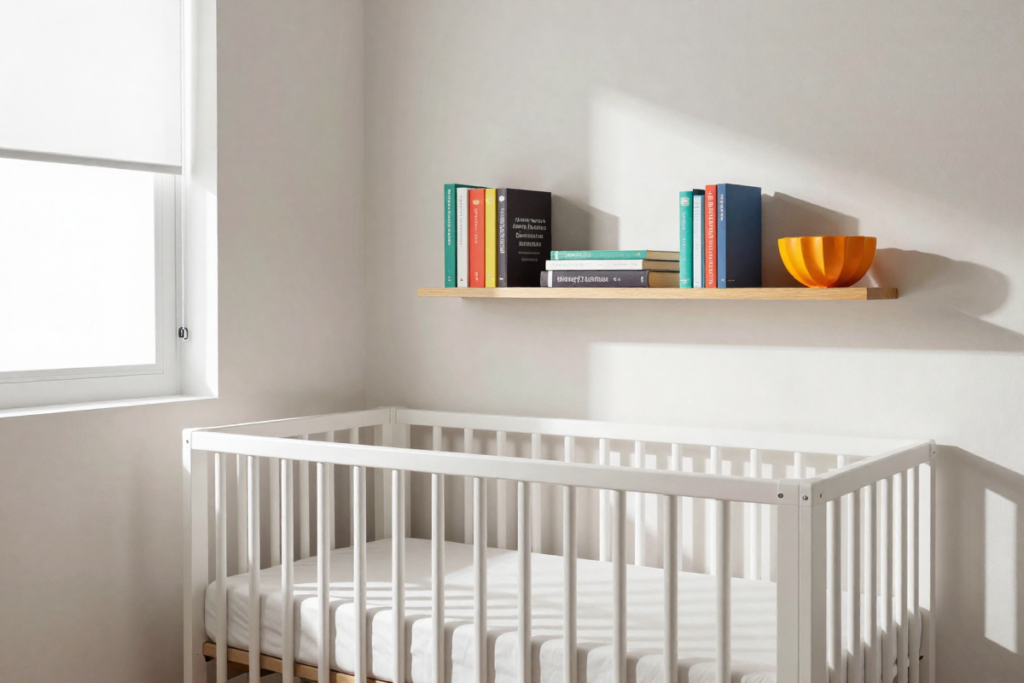
The nursery should be your baby’s sanctuary — a calm, hazard-minimized space for sleep and exploration.
The Crib Safe sleep guidelines from the American Academy of Pediatrics are clear: the crib should be completely bare. No bumper pads, no loose blankets, no pillows, no stuffed animals. A firm mattress with a fitted sheet is all that is needed for a safe sleep environment for baby.
Toy and Book Storage Any bookshelf, dresser, or storage unit in the nursery needs to be anchored to the wall with anti-tip furniture straps. The moment your baby can pull to stand, unsecured furniture becomes a tipping hazard.
Window Safety Install window guards for child safety on nursery windows, and use window locks that allow ventilation so you can keep the room cool without creating a fall risk. Ensure all blinds or curtains in the nursery are cordless.
Section 3: Renter-Friendly and Budget Baby Proofing Hacks
Baby proofing for renters without drilling is more achievable than ever. Here is what actually works:
- Damage-free adhesive cabinet locks (look for 3M Command-compatible products) work well on most cabinet surfaces for renters.
- Pressure-mounted baby gates at the bottom of stairs or in hallway openings require no wall damage.
- Foam edge bumpers with adhesive backing peel off cleanly from most surfaces.
- Pool noodles as door pinch guards: Slit a pool noodle lengthwise and slip it over the top of a door to prevent it from closing fully — a clever DIY baby proofing idea that costs about $1.
- Tension rods inside lower cabinets create a simple barrier that prevents doors from opening wide enough for little hands to reach inside.
For renters concerned about security deposits, document every product installation with photos before and after, and choose adhesive-first options wherever possible.
Section 4: Hidden Household Dangers Parents Often Forget
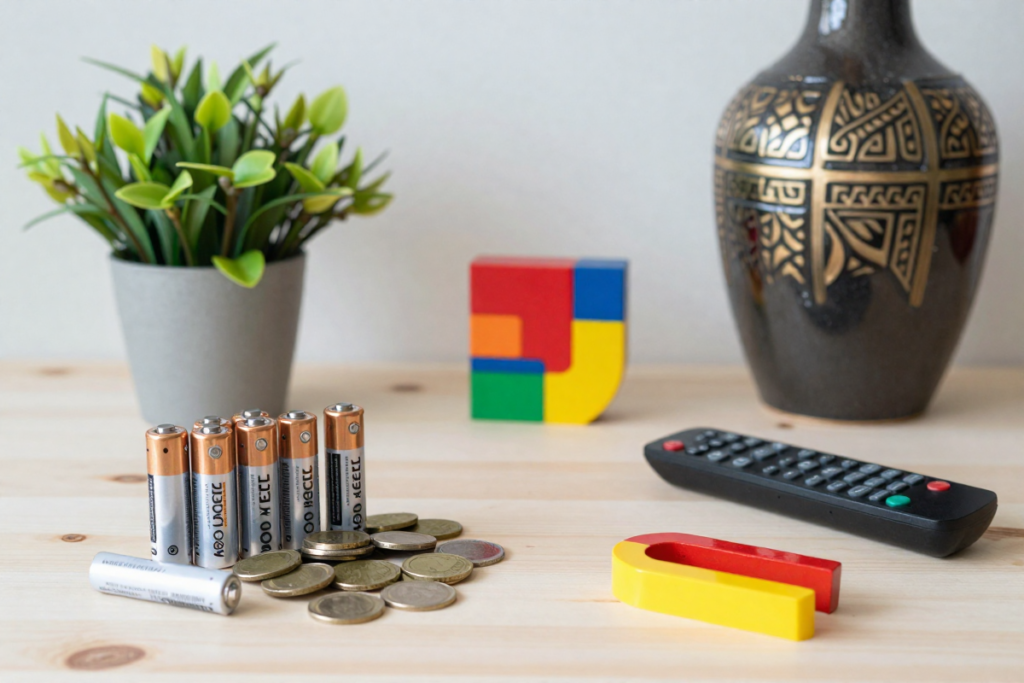
Even the most thorough baby proofing checklist can miss a few sneaky hazards.
Houseplants Many common houseplants are toxic if ingested, including pothos, philodendron, peace lily, and snake plants. Move all houseplants to high shelves or rooms your baby cannot access, and cross-reference your plant collection with the ASPCA’s toxic plant database.
Loose Change and Small Objects Establish a habit of doing a daily low-level sweep of floors and low surfaces. Coins, pen caps, button-sized magnets, and small toy parts are all serious choking hazards. Any object that fits through a standard toilet paper tube is a danger for children under three.
Button Batteries This cannot be overstated: button batteries are one of the most dangerous household hazards for young children. If swallowed, they can cause severe internal burns within two hours. Secure all remote controls, key fobs, and devices with button batteries using tape or locked storage. Check any children’s toys that use them as well.
Heavy Decor and Entryway Items Picture frames, decorative vases, and heavy objects on low shelves can be pulled down. Secure or relocate anything that could injure a child if it fell.
Section 5: Frequently Asked Questions
How much does it cost to baby proof a house? The cost to baby proof a home varies widely depending on your home’s size and the products you choose. A basic DIY baby proofing kit covering the essentials — outlet covers, cabinet locks, corner guards, and a couple of baby gates — typically runs between $100 and $250. A more comprehensive setup including high-quality hardware-mounted gates, magnetic cabinet locks, and window guards can range from $300 to $600+. Hiring a professional baby proofer near you adds a service fee that typically runs $200–$500 on top of product costs.
Is it necessary to hire a professional baby proofer near me? Not necessarily. Most parents can successfully complete a thorough childproofing using this room-by-room guide and quality products. That said, a professional baby proofing service makes sense if your home has unique features like a complex staircase, large amounts of built-in furniture, or if you simply want a certified expert to identify hazards you might have missed. Think of it as a home safety inspection for baby — a worthwhile investment for high-risk homes or parents who want complete peace of mind.
Are pressure-mounted baby gates safe for the top of stairs? No. Absolutely not. This is one of the most important baby proofing safety facts to understand. Pressure-mounted gates work by tension and can be dislodged by a child pushing against them — which is exactly what happens at the top of stairs. For the top of any staircase, always use a hardware-mounted gate that is physically screwed into the wall or banister. This is non-negotiable.
How do I baby proof a home with an open floor plan? Open floor plans present a unique challenge because there are fewer natural barriers. The most effective strategy combines freestanding play yards or safety gates used as room dividers, strategic furniture arrangement to limit access to hazardous areas, and meticulous attention to securing all furniture and covering all outlets throughout the open space. Retractable baby gates are particularly useful here for spanning wide doorways and openings.
What should I do if my baby swallows something dangerous? Act immediately. For potential poisoning, call the Poison Control Hotline: 1-800-222-1222 (US) — available 24/7. Do not induce vomiting unless specifically instructed by Poison Control or emergency services. For a swallowed object — especially a button battery or magnet — call 911 or go to the emergency room immediately without waiting for symptoms. Save these numbers in your phone now, before you need them.
Conclusion and Quick-Reference Buyer’s Guide
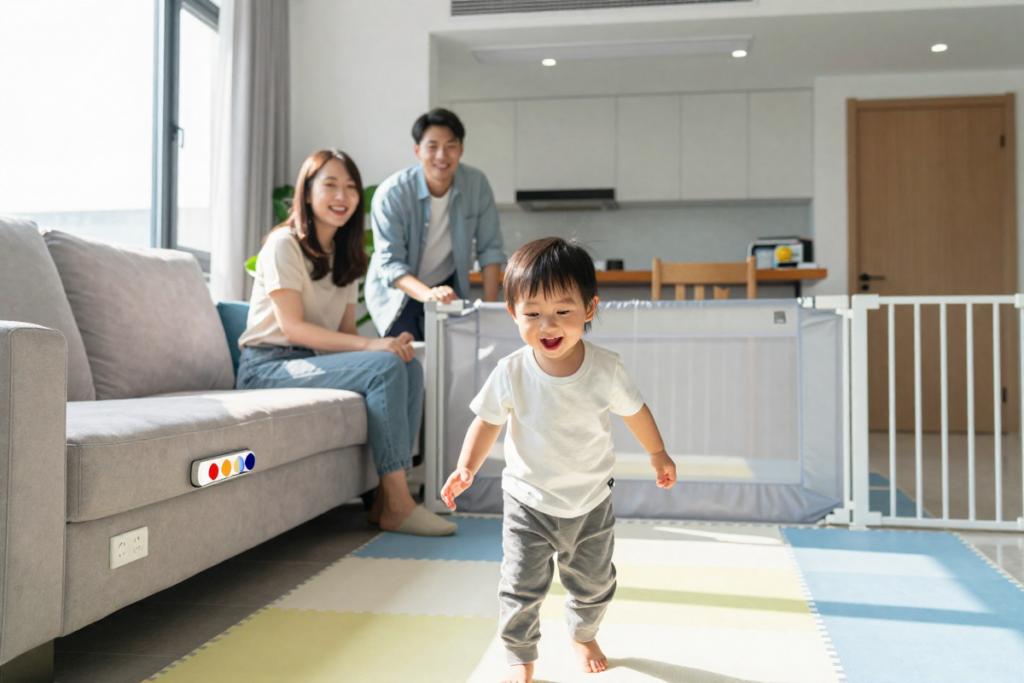
Baby proofing a home does not mean wrapping your entire house in bubble wrap or living in fear. It means creating a child-safe home environment where your baby has the freedom to explore, learn, and grow — with the guardrails in place that allow you to breathe easy while they do it.
The Montessori-friendly approach to baby proofing recognizes that safe exploration is good for child development. The goal is not to prevent your baby from interacting with the world, but to make that world genuinely safe for their curious little hands and minds.
Work through this room-by-room guide at your own pace, starting with the highest-risk areas (stairs, kitchen, bathroom) and building outward. You do not have to do it all in one weekend.
🛒 Must-Have Baby Safety Products: Quick-Reference Guide
| Product | Best For | Type | Affiliate Link |
|---|---|---|---|
| Hardware-Mounted Baby Gate | Top of stairs | Hardware | 📌 [CHECK PRICE HERE] |
| Retractable Baby Gate | Wide openings, bottom of stairs | Pressure/Retractable | 📌 [CHECK PRICE HERE] |
| Magnetic Cabinet Locks | Kitchen & bathroom cabinets | Magnetic | 📌 [CHECK PRICE HERE] |
| Self-Closing Outlet Covers | All electrical outlets | Sliding plate | 📌 [CHECK PRICE HERE] |
| Anti-Tip Furniture Straps | Dressers, bookshelves, TVs | Anchor strap | 📌 [CHECK PRICE HERE] |
| Corner & Edge Bumper Set | Coffee tables, hearths, shelving | Foam adhesive | 📌 [CHECK PRICE HERE] |
| Toilet Lid Lock | Bathroom toilet | Lock | 📌 [CHECK PRICE HERE] |
| Baby Proof TV Safety Strap | Flat-screen TVs | Anchor strap | 📌 [CHECK PRICE HERE] |
| Bathtub Faucet Cover | Bath time safety | Soft cover | 📌 [CHECK PRICE HERE] |
| Universal Baby Proofing Kit | Whole-home starter kit | Multi-product | 📌 [CHECK PRICE HERE] |
Now it is your turn! What is the one baby proofing hack you wish someone had told you sooner? Drop it in the comments below — your tip might be the one that helps another new parent breathe a little easier. And if you found this guide helpful, share it with an expecting friend or pin it to your parenting board for later!
Affiliate Disclosure: This post contains affiliate links. If you purchase a product through one of my links, I may earn a small commission at no extra cost to you. I only recommend products I genuinely trust for child safety.
No Responses