Introduction
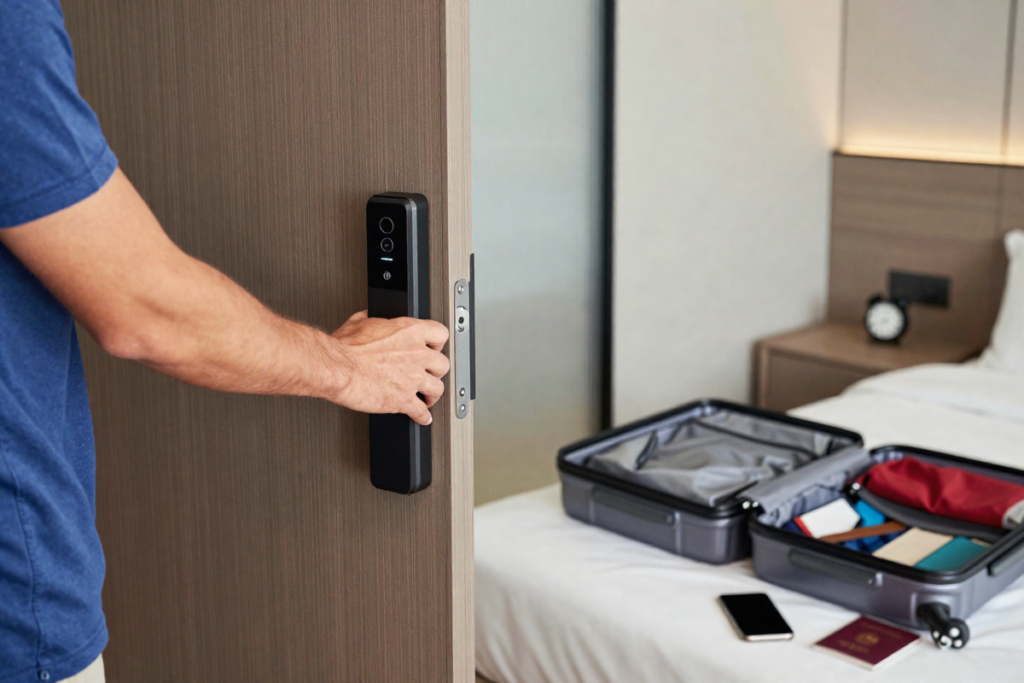
Imagine checking into your hotel room after an exhausting day of travel, only to realize the lock feels flimsy, or you’re on a ground floor right next to the street. That moment of uncertainty hits hard: Is my hotel room actually safe?
While travel is exciting and rewarding, the reality is that hotel room burglaries, unauthorized staff entry, and hidden camera concerns are genuine risks that many travelers face. The problem? Most people rely solely on a standard electronic key card lock—which is highly vulnerable to hacking, cloning, and accidental breaches. Hotel key card security vulnerabilities have been documented for years, yet many guests remain blissfully unaware of the actual risks they’re taking.
The good news? You don’t need to lose sleep over it.
This comprehensive guide covers simple, actionable hotel room security hacks using everyday items already in your room (like hangers and towels) and affordable, effective security gadgets you can buy on Amazon to bulletproof your temporary home. Whether you’re a solo female traveler concerned about safety, a business traveler protecting your laptop, or a family looking for peace of mind, we’ve got you covered with practical, expert-approved strategies.
🔒 Top 3 Travel Security Essentials (Quick Affiliate Box)
Secure your room with these proven products:
- [Portable Door Lock] – Instantly upgrades any hotel lock
- [Door Stop Alarm] – Loud 120dB alert if someone enters
- [Hidden Camera Detector] – Peace of mind in seconds
Section 1: What Should I Check When I First Enter a Hotel Room?

The Initial Safety Sweep (The 5-Minute Arrival Checklist)
The moment you step into your hotel room, don’t fully relax yet. Your first five minutes are critical. Keep the door propped open with your heavy luggage while you conduct a thorough initial inspection. Never fully close the door and let down your guard until you’ve checked the following items.
Why this matters: Checking your room immediately after arrival lets you report any security issues to the front desk before they become your problem. It also ensures no one is hiding in the space before you settle in for the night.
1. Check the Closets & Bathroom
Start with the most obvious hiding spots. Open closet doors fully and peer behind shower curtains in the bathroom. This might feel paranoid, but unauthorized entry and housekeeping crimes do occur in budget and mid-range hotels. A quick visual sweep takes 30 seconds and provides genuine peace of mind.
2. Ensure All Window & Balcony Locks Are Engaged
Pay special attention to ground floor rooms and second-floor rooms—they present the highest risk for unauthorized entry from the exterior. Check:
- All window locks are fully engaged
- Sliding glass doors are locked and cannot be lifted off their tracks
- The balcony door has both the primary lock AND any secondary deadbolts engaged
Pro tip: If you’re on a higher floor in a building with accessible exterior features (like fire escapes or architectural ledges), still check windows. Not all threats come from ground level.
3. Inspect the Peephole for Damage
Look through your room’s peephole and check for any signs of tampering. A compromised peephole is a vulnerability—someone outside can use a peephole reverse viewer (a small device that allows viewing into the room) to see inside before you open the door.
The peephole hack: Place a small piece of clear tape, a Band-Aid, or a tiny piece of paper over the peephole from the inside if you’re concerned about reverse viewing. This blocks any external viewing device while still allowing you to look out.
4. Check Any Connecting Doors
Many hotels feature connecting rooms between adjacent suites. These doors have locks, but they’re often overlooked during the initial room check. Verify that:
- The connecting door is fully locked
- The deadbolt engages completely
- You can’t hear activity from the adjacent room (which might indicate it’s occupied)
If the connecting door lock feels loose or broken, call the front desk immediately and request a room change.
Section 2: Fortifying the Entrance—How to Secure a Hotel Room Door From the Inside
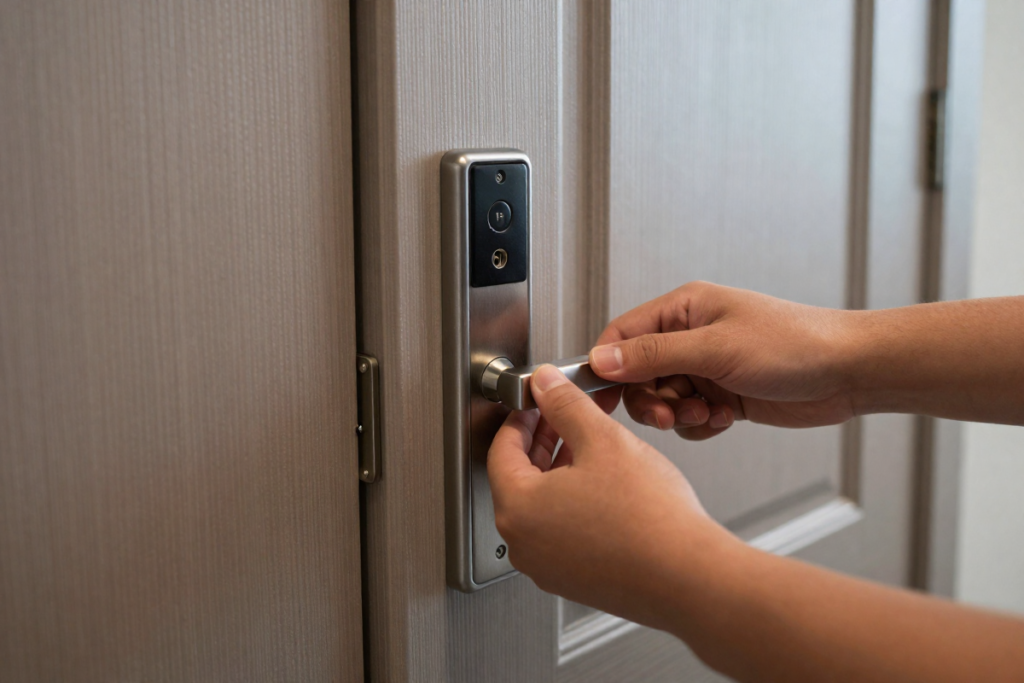
Why Standard Hotel Locks Aren’t Enough
Here’s the uncomfortable truth: standard hotel locks are not designed to keep people out—they’re designed to keep people in during emergencies and to allow hotel staff access with master keys.
Most hotel rooms feature either:
- Electronic key card locks (vulnerable to cloning and hacking)
- Traditional deadbolts with chain locks (which can be bypassed if the door frame is weak)
The Onity hotel lock vulnerability, which became public knowledge years ago, demonstrated that many electronic locks could be opened with a simple tool. Even newer locks have master override codes that allow staff access. While hotels have legitimate reasons for these override systems (emergency situations, lockouts), they do create security gaps for guests.
The solution? Layer your security. Don’t rely on a single lock—use multiple physical barriers to slow down or prevent unauthorized entry.
Easy DIY Door Hacks (No Gadgets Required)
You don’t need to buy anything to significantly improve your door security. These simple tricks work with items already in your room.
The Hanger Hack
This is one of the most effective DIY hotel room door security hacks, and it requires just two coat hangers (usually available in your closet).
Step-by-step instructions:
- Remove two metal coat hangers from the closet
- Unbend them and create two elongated pieces of metal
- Loop them together to form a rough “U” shape that’s about 18-24 inches wide
- Position the looped hanger over the swing bar (or night latch) on the inside of the door—the horizontal bar that extends from the door into the frame when locked
- Test by attempting to push the door open from outside—the hanger prevents the swing bar from retracting
Why it works: Even if someone uses a key card or master key to unlock the deadbolt, the swing bar remains blocked by the hanger. This creates a second physical barrier.
The Towel Trick
This simple hack requires only a hand towel and takes 10 seconds to deploy.
Step-by-step instructions:
- Take a hand towel (or any fabric item thick enough to jam a mechanism)
- Locate the gap between the top of the door frame and the door itself
- Wedge the towel tightly into this gap, positioning it above the night latch mechanism
- You can also wedge it around the swing bar lock itself if there’s enough space
Why it works: The towel jams the mechanism, preventing it from fully extending or retracting. Even if someone has a key, the mechanical barrier prevents the door from opening beyond a few inches.
The Fork Trick
This is a clever (and somewhat famous) DIY hotel room door security hack using a dinner fork from room service or the hotel restaurant.
Step-by-step instructions:
- Find a sturdy plastic or metal fork in your room (check the room service menu or ask housekeeping)
- Insert the fork handle-first into the lock mechanism on the inside of the door (into the deadbolt keyhole or the swing bar lock)
- The fork’s prongs should jam the locking mechanism, preventing it from turning or retracting
- Test gently—you don’t want to break the fork inside the lock
Why it works: The fork creates a physical obstruction within the lock itself, making it inoperable even if someone has the correct key card or master key.
Important note: These DIY hacks work best when layered. Use the hanger hack AND the towel trick together for maximum security.
Best Portable Door Locks & Gadgets
If you prefer a dedicated product (and we recommend having one for frequent travelers), these portable door locks are game-changers.
Addalock Portable Door Lock
The Addalock is widely considered one of the best portable door locks for hotel rooms. Here’s how it works:
- Installation: No tools required. It slides into the gap between the door and frame at the top or bottom
- Function: It prevents the door from opening beyond a few inches, even if someone has a key
- Portability: Weighs less than 3 ounces and fits easily into any luggage or carry-on
- Reliability: Mechanical (no batteries), so it never fails
Unlike some cheap hotel door locks, the Addalock is durable and will last through hundreds of stays. It’s particularly effective for solo female travelers and business travelers who want a simple, reliable backup lock.
Pro tip: Use the Addalock in combination with the hanger hack for maximum security. The two methods work together without conflicting.
Rubber Door Stopper with Alarm
A rubber door stopper serves two functions: it blocks the door from opening far enough for someone to squeeze through, AND (if you choose a motion-activated alarm version) it emits a loud siren if pressure is applied to the door.
Why it’s valuable:
- Visual deterrent (anyone can see it’s there)
- Physical barrier (prevents the door from opening)
- Auditory alarm (alerts you if someone tries to force entry while you’re sleeping)
- Cost-effective (usually $15-30)
The 120dB alarm models are particularly effective because they’re loud enough to wake you from deep sleep and potentially alert other guests and hotel staff.
Hotel Room Door Lock Jammer or Portable Door Reinforcement Bar
[Top Reviewed: AceMining Portable Door Reinforcement Bar ]
These bars fit horizontally across the door frame from the inside, preventing the door from opening even with a key. Some premium models include:
- Adjustable length to fit different door sizes
- Pressure-activated alarms that alert you if someone forces the door
- Heavy-duty construction that can withstand significant force
While more expensive than portable locks ($50-100+), they’re excellent if you frequently stay in hotels for extended periods or if you’re particularly security-conscious.
Section 3: How to Keep Valuables Safe in a Hotel Room

The Truth About Hotel Room Safes (Are They Actually Safe?)
Here’s the question every traveler asks: Should I use the hotel room safe for my valuables? The answer is more complicated than a simple yes or no.
The vulnerabilities:
- Master override codes: Hotel safes typically have master codes that allow staff to open them in emergencies or if a guest is locked out. This means hotel management (and potentially unscrupulous staff) can access your valuables.
- The Onity lock vulnerability: Similar to hotel electronic door locks, some safe models have known bypass exploits that allow opening without codes.
- Staff theft: While rare, hotel employee theft does occur, especially in budget properties. Housekeeping, maintenance, or front desk staff with access to master codes could target known items in safes.
- Poor installation: Some safes are bolted to furniture (nightstands, dressers) that can be moved or removed, allowing the entire safe to be stolen.
The verdict: Hotel safes are better than leaving valuables on the dresser, but they’re not impenetrable. They primarily protect against opportunistic theft by housekeeping, not determined theft by hotel staff with master codes.
Better Ways to Protect Your Gear
The Do Not Disturb Sign Strategy
One of the simplest and most effective hotel room security hacks is using the “Do Not Disturb” sign strategically.
Here’s the psychology:
- When housekeeping sees the “Do Not Disturb” sign, they skip the room entirely
- Fewer people entering = fewer opportunities for theft or unauthorized entry
- Thieves may assume the room is occupied if they see the sign
Pro tip: Also leave a TV on low volume or play soft music if you’re leaving the room. This creates the impression that someone is inside, providing a psychological deterrent to potential intruders.
Important caveat: Eventually, you’ll need housekeeping service. Call the front desk to schedule a specific time when you can be present in the room during cleaning, or use the room safe during that brief window.
Alternative Hiding Spots
Rather than relying on the in-room safe, consider these creative hiding locations:
- Hollowed-out book: Place high-value items or emergency cash in a hollowed-out book spine on the nightstand. Few thieves would think to check books.
- Empty shampoo bottle: Small valuables fit inside empty hotel shampoo bottles in the bathroom. Most thieves won’t inspect toiletries.
- Luggage interior pockets: Some luggage has hidden compartments. Keep important documents or extra cash there.
- Taped to the underside of furniture: Use painter’s tape (which won’t damage finishes) to secure an envelope to the underside of the bed frame or a nightstand.
Reality check: These methods work against casual theft by housekeeping, not against targeted theft by someone actively searching your room. Use them for secondary valuables or emergency cash, not for passports or irreplaceable items.
Anti-Theft Bags & Luggage Cable Locks
[Option 1: Pacsafe Anti-Theft Bag for Hotel Travel]
[Option 2: Luggage Cable Lock]
For items you need to keep with you (laptop, camera, important documents), invest in:
- Pacsafe bags: These feature slash-resistant material and metal mesh linings, making them extremely difficult to cut open. They’re ideal for keeping your laptop and valuables with you while exploring.
- Luggage cable locks: Secure your suitcase to heavy furniture (bed frame, dresser) using a cable lock. This prevents casual theft if someone tries to grab your bag while you’re momentarily distracted.
Best practice: Keep your laptop, passport, and high-value items with you in a Pacsafe bag when you leave the room. Leave low-value items or clothing in the locked suitcase.
Section 4: Privacy Patrol—How to Check for Hidden Cameras in a Hotel Room

This is where many travelers get anxious, and rightfully so: hidden cameras in hotel rooms is a real (though still rare) concern. The high search volume for “hidden cameras hotel room” (22,200 monthly searches) reflects genuine traveler anxiety about privacy.
Where Spy Cameras Commonly Hide
Modern hidden cameras are small and can be concealed in everyday objects. High-risk locations include:
- Smoke detectors: A small camera lens can fit inside without obvious modification
- Alarm clocks & digital clocks: The display area provides perfect cover for a tiny lens
- USB wall chargers: Cameras can be embedded in the charging port or body
- Picture frames or artwork: A lens can be hidden behind glass or in frame seams
- Bathroom ventilation fans: Positioned to capture the shower or toilet area
- Showerhead or faucet: Cameras can be embedded in these fixtures
- Phone charging stations or desk accessories: Any powered device is a potential host
- TV remotes or set-top boxes: The IR lens area can hide a camera
- Air purifiers or humidifiers: Electronic devices in bedrooms are suspect
Note: While hidden cameras in bathrooms and bedrooms would be illegal in virtually all jurisdictions, rogue property owners (especially in Airbnb situations) or individual bad actors do occasionally plant them.
Step-by-Step Privacy Sweep Protocol
The Physical Inspection
- Turn off the lights in the room—this is key to spotting reflective camera lenses
- Use your phone’s flashlight or a dedicated flashlight to scan suspicious items
- Look for reflections: Camera lenses are reflective and will appear as small, shiny circles or dots under flashlight examination
- Check suspicious devices closely: Pick up alarm clocks, smoke detectors, and USB chargers. Look for:
- Small holes that aren’t part of normal design
- Lenses (circular reflective surfaces)
- Anything that appears modified or glued on
Pro tip: Take a photo of any suspicious device with your phone’s camera. If there’s a hidden camera, it may be visible in your phone’s image even if you can’t see it with the naked eye.
Using Your Smartphone (Hidden Camera Detector App)
Modern smartphone apps can detect hidden Wi-Fi cameras by scanning for local networks.
How it works:
- Download a hidden camera detector app (search “hidden camera detector” in your phone’s app store)
- Enable Wi-Fi scanning mode on the app
- The app scans your local Wi-Fi network for connected devices
- Look for suspicious device names (often labeled as generic things like “IP_Camera” or “Network_Device”)
- Cross-reference with devices the hotel says should be on the network
Limitations: This method only works for wireless cameras. A wired hidden camera wouldn’t appear on the Wi-Fi network.
Professional Privacy Solutions
RF Detector for Hidden Cameras
[Recommended: RF Hidden Camera Detector for Travel]
For travelers who want absolute peace of mind, a dedicated RF (radio frequency) detector can identify both wireless and battery-powered hidden cameras by detecting their electronic emissions.
How it works:
- Scans the room for radio frequency signals used by wireless cameras
- Detects both Wi-Fi and non-Wi-Fi cameras
- Portable and easy to use
- More reliable than smartphone apps
Cost consideration: Quality RF detectors range from $50-200+, so they’re an investment. However, they’re valuable for frequent travelers or those particularly concerned about privacy.
Section 5: How to Protect Your Data on Hotel Wi-Fi

Your hotel room security extends beyond physical threats. Digital security on hotel networks is equally important, especially if you handle sensitive information while traveling.
The Cyber Threats of Hotel Networks
Man-in-the-Middle Attacks
On unsecured hotel Wi-Fi, a hacker can position themselves as an intermediary between your device and the internet, intercepting all your data. This means they can see:
- Your passwords and login credentials
- Credit card numbers
- Personal emails and messages
- Sensitive work documents
“Evil Twin” Networks
Hackers can create fake Wi-Fi networks with names similar to the hotel’s actual network (e.g., “HotelName_WiFi_Free” instead of “HotelName_WiFi”). When you connect to the fake network, all your data flows through the hacker’s device.
Is Hotel Wi-Fi Safe for Banking?
Short answer: No. Never use unsecured hotel Wi-Fi for banking, cryptocurrency transactions, or any financial activity. The risk of data interception is simply too high.
Easy Cybersecurity Actions
Use a VPN (Virtual Private Network)
[BEST OVERALL: Travel VPN Subscription]
A VPN encrypts all your internet traffic, making it unreadable to anyone intercepting your connection—including hotel Wi-Fi administrators and potential hackers.
How it works:
- All your data is encrypted before leaving your device
- It passes through the VPN server’s encrypted tunnel
- Even if intercepted, the data is unreadable without the encryption key
- The website you visit only sees the VPN server’s IP address, not your device’s location
Top picks for travelers:
- ExpressVPN (excellent speeds for streaming and downloads)
- NordVPN (strong security, good pricing)
- Surfshark (unlimited simultaneous connections, budget-friendly)
Cost: Most quality VPNs cost $5-12 per month or $50-120 per year.
Disable File Sharing & Auto-Connect Features
Before connecting to hotel Wi-Fi:
- Turn off AirDrop (iOS devices)
- Disable local file sharing in your device settings
- Turn off automatic Wi-Fi connection so your device doesn’t auto-connect to suspicious networks
- Disable Bluetooth when not in use (Bluetooth can be exploited similarly to Wi-Fi)
These settings prevent your device from automatically connecting to or sharing data with nearby devices.
Smart TV Privacy Risks
Hotel smart TVs often have built-in cameras and microphones for interactive features. Before using the TV:
- Check the camera/microphone settings in the TV menu
- Log out of all streaming accounts (Netflix, Hulu, etc.) before leaving the room
- Consider covering the camera with a small piece of tape if you’re particularly concerned
- Never enter payment information on hotel TVs
Section 6: Hotel Safety Tips for Solo Female & Business Travelers

Smart Booking Strategies
Request the Right Floor
One of the best hotel room safety tips is choosing your floor strategically.
The safest floor range: 2nd to 4th floor
- Why? Ground floor rooms are accessible from street level, creating easy entry points for burglars and intruders
- Why not the top floor? Higher floors are harder to evacuate in emergencies, and some travelers prefer lower floors for that reason
- The sweet spot: 2nd to 4th floor offers security from ground-level access while remaining accessible to fire department ladders in emergency situations
How to request it: When booking online, leave a note in the special requests field. When checking in, politely ask the front desk: “Would it be possible to get a room on the second or third floor for safety reasons?”
Most hotels will accommodate this request, especially if you explain your reasoning.
Protect Your Room Number at Check-In
Many hotels will loudly announce your room number when you check in. This is a serious security vulnerability.
What to do:
- When the front desk clerk starts to announce your room number, politely interrupt: “Could you please write it down instead of saying it aloud?”
- Most professional hotels will understand this request
- If they refuse, ask to speak to a manager and explain your security concerns
- In the worst case, you can request a different room before leaving the desk
Why this matters: Hotel tailgating occurs when someone follows a guest to their room. If the front desk staff announces your room number to the entire lobby, anyone listening knows exactly where to find you.
Social Engineering Defense
Verify Hotel Staff Identity Before Opening the Door
This is critical, especially when alone. Never open the door just because someone knocks and claims to be housekeeping, maintenance, or management.
The proper procedure:
- Look through the peephole to see who’s outside
- Don’t open the door unless you recognize them from previous interactions
- Call the front desk directly using the room phone: “I have someone at my door claiming to be [maintenance/housekeeping]. Can you verify they’re scheduled?”
- Wait for the front desk to verify before opening the door
Why this matters: Social engineering attacks at hotels are real. Someone could claim to be hotel staff to gain access to your room.
Pro tip: If you’re particularly concerned, you can ask any “hotel staff” to slide their ID under the door for you to examine before opening.
Frequently Asked Questions (FAQ)

Q1: How can I make my hotel room more secure?
A: Layer your security using multiple methods: use a portable door lock or the hanger hack, place a door stop alarm at the entry, ensure all windows and connecting doors are locked, check for hidden cameras, and use a VPN for any online activity. The combination of physical and digital security measures provides comprehensive protection.
Q2: Do portable door locks actually work on hotel doors?
A: Yes. Portable locks like the Addalock prevent the door from opening more than a few inches, even if someone has a key card or master key. They work because they create a physical barrier independent of the hotel’s lock system. They’re particularly effective when combined with DIY hacks like the hanger trick.
Q3: What is the safest floor to stay on in a hotel?
A: The 2nd to 4th floors offer the best balance of security and emergency accessibility. Ground floor rooms are vulnerable to external access, while very high floors can be difficult to evacuate in emergencies.
Q4: Can someone hack a hotel key card to enter my room?
A: Theoretically yes, though it’s uncommon. Some electronic hotel locks have known vulnerabilities (like the Onity exploit). This is why layering security with physical locks is important—even if someone bypasses the electronic lock, physical barriers like portable locks or the hanger hack still protect you.
Q5: Should I use the hotel room safe for my passport?
A: The hotel safe is better than leaving your passport on the dresser, but it’s not impenetrable. Hotel staff can access safes with master codes. For passports, keep them with you in a Pacsafe anti-theft bag or hide them in a creative location like a hollowed-out book, using the safe as a secondary backup.
Q6: How do I check for hidden cameras in a hotel room?
A: Start with a physical inspection—turn off lights and use your phone’s flashlight to look for reflective lenses in suspicious devices like alarm clocks and smoke detectors. You can also use a hidden camera detector app to scan for wireless cameras on the Wi-Fi network. For professional-grade detection, consider an RF detector.
Q7: Is hotel Wi-Fi safe to use for banking?
A: No. Unsecured hotel Wi-Fi is vulnerable to man-in-the-middle attacks where hackers can intercept your data. Never handle banking, cryptocurrency, or sensitive financial information on hotel Wi-Fi. Always use a VPN if you must access sensitive accounts, or wait until you’re on a secured network.
Q8: What should I do first when checking into a hotel room?
A: Conduct a 5-minute safety sweep: check closets and bathrooms for intruders, verify all windows and balcony doors are locked, inspect the peephole, check connecting doors, and look for obvious signs of tampering or security issues. Keep the main door propped open while you do this.
Q9: How do I know if my hotel room has been entered while I was away?
A: Place a small object (hair, paper, or a pen) in a door gap or on top of a door before leaving. If it’s displaced when you return, someone entered the room. You can also place your “Do Not Disturb” sign and check if housekeeping moved it. If you suspect unauthorized entry, contact the front desk immediately.
Q10: What is the fork trick for locking a hotel door?
A: Insert the tines of a fork into the deadbolt keyhole from inside the room. The fork’s prongs jam the lock mechanism, preventing it from turning even if someone has a key card or master key. It’s a simple, free security hack that works in emergency situations.
Conclusion: Layered Security for Peace of Mind

Hotel room security isn’t about paranoia—it’s about being prepared. By layering multiple security methods, you dramatically reduce the risk of unauthorized entry, theft, or privacy violations.
Your Hotel Room Security Checklist:
Physical Security:
- ✓ Use a portable door lock (Addalock) or DIY hanger hack
- ✓ Place a door stop alarm at the entry
- ✓ Verify all windows and balcony doors are locked
- ✓ Check connecting doors if present
- ✓ Request a mid-range floor (2nd-4th) during booking
- ✓ Keep valuables in a Pacsafe bag or creative hiding spots
Privacy Security:
- ✓ Conduct a physical sweep for hidden cameras
- ✓ Use a hidden camera detector app to scan the Wi-Fi network
- ✓ Cover the peephole if concerned about reverse viewing
- ✓ Check smart TV settings and log out of accounts
Digital Security:
- ✓ Use a VPN for all internet activity
- ✓ Disable file sharing and auto-connect features
- ✓ Never conduct banking on hotel Wi-Fi
- ✓ Log out of streaming accounts before leaving
Behavioral Security:
- ✓ Request staff identification before opening the door
- ✓ Use the “Do Not Disturb” sign strategically
- ✓ Don’t let staff announce your room number aloud
- ✓ Keep the main door locked at all times when inside
Your Free Downloadable Hotel Room Security Checklist
We’ve created a comprehensive, printable 1-page “Ultimate Hotel Room Security Checklist” that you can download and keep with your travel documents. It includes every hack, product recommendation, and verification step outlined in this guide.
What’s Your Essential Hotel Room Security Hack?
Every traveler has their go-to safety tool or technique. Whether it’s the tried-and-true portable door lock, the hanger hack, or a premium RF detector, we’d love to hear what makes you feel secure while traveling.
Share in the comments below: What is your must-have hotel safety gadget or technique when you travel?
Disclaimer: This article contains affiliate links. If you purchase an item through the link I will earn a small commission at no extra cost to you.
No Responses