
Introduction: The Evolution of Everyday Carry in 2026
What does your pocket dump say about you?
In 2026, everyday carry—or EDC as the community calls it—has evolved dramatically from the heavy tactical “doomsday-prep” bulges of yesteryear into something far more refined: a streamlined, highly functional extension of your personal style and daily preparedness. Whether you’re a minimalist who carries only three items or an enthusiast with a carefully curated selection, EDC gear represents one of the most personal decisions you’ll make about the tools you trust with your daily life.
But what does EDC stand for, exactly? And more importantly, what should I carry with me every day?
Everyday Carry (EDC) is the philosophy of selecting and carrying practical items that serve your daily routine—items you actually use, not items you hope you’ll need someday. It’s the marriage of two seemingly opposing forces: minimalism (carrying only what you genuinely use) and preparedness (being ready for unexpected daily tasks and minor emergencies).
The 2026 Shift: From Tactical Black Nylon to “Jewelry-First” Aesthetics
The EDC movement has undergone a massive aesthetic transformation. Gone are the days when carrying EDC gear meant sporting bulky black tactical nylon that screamed “prepper” from across the room. In 2026, the philosophy has shifted toward what the community calls the “gray man carry”—items that blend seamlessly into professional and urban environments while maintaining serious functionality.
Premium materials like titanium, brass with natural patina, and carbon fiber have become the standards for luxury everyday carry items. Pocket knives now feature button locks and crossbar mechanisms instead of traditional frame locks. EDC flashlights have evolved from chunky tubular designs into ultra-slim “flat lights” that disappear into jeans pockets. And EDC wallets have become RFID-blocking slim fortresses of minimalist design.
The core philosophy remains unchanged: the best EDC gear is the gear you actually carry every day. If it’s too heavy, too bulky, or too conspicuous, it stays home—and that defeats the entire purpose.
The Core Pillar: Choosing Your Ultimate EDC Knife
If there’s one item that defines the EDC kit, it’s the knife. Whether you’re opening packages, cutting through fabric, or handling dozens of daily micro-tasks, a quality EDC knife is the cornerstone of functional carry.
What Makes a Great EDC Knife in 2026?
The perfect everyday carry blade balances four critical factors:
- Blade Length & Legality – Knowing your local laws
- Ergonomics – Comfort during extended use
- Steel Quality – Edge retention and maintenance requirements
- Deployment Mechanism – Speed and safety of opening/closing
Blade Length & Legality: Navigating Legal EDC Knife Blade Lengths by State
Before you fall in love with a knife, you need to verify the legal EDC knife blade length by state. Laws vary wildly across the United States. Some states allow unlimited blade lengths; others restrict to 2.5 inches or less. A few states outlaw certain mechanisms entirely.
Pro tip: Check your state’s legal restrictions before purchasing. Websites like AKTI.org provide up-to-date legal information for every jurisdiction.
The Button Lock Revolution: Why Safety Meets Fidget Factor
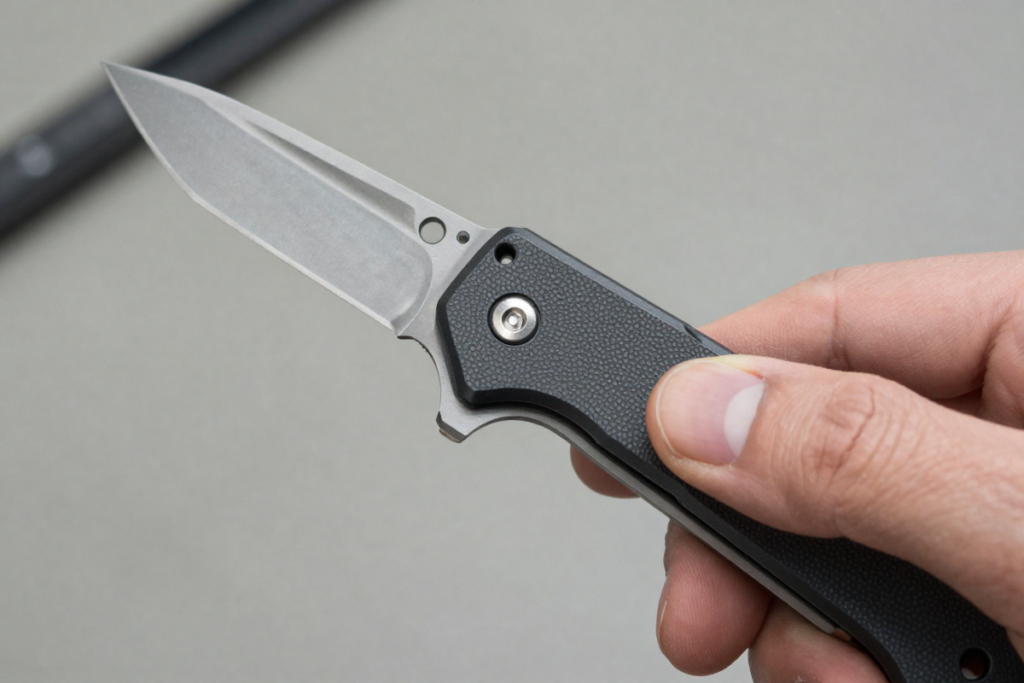
For decades, the frame lock dominated EDC knife design. In 2026, the button lock and crossbar lock mechanisms have largely displaced it—and for good reason. These designs offer superior safety (your hand can’t accidentally close the blade), superior one-handed operation, and an undeniable “fidget factor” that makes carrying a quality knife genuinely enjoyable.
Brands like Gerber and boutique manufacturers have perfected button lock technology, making it the de facto standard for modern best EDC gear recommendations.
Premium Steel Demystified
Understanding EDC knife steel is essential. Different steels offer different trade-offs between edge retention, corrosion resistance, and ease of sharpening.
| Steel Type | Edge Retention | Corrosion Resistance | Ease of Sharpening | Best For |
|---|---|---|---|---|
| D2 Tool Steel | Excellent | Poor | Moderate | Budget carry, hard use |
| S35VN | Excellent | Excellent | Moderate | Premium all-rounder |
| S30V | Excellent | Excellent | Difficult | Ultra-premium folders |
| MagnaCut | Excellent | Good | Easy | Modern workhorse steel |
| M390 | Outstanding | Excellent | Difficult | Luxury/low-maintenance |
For most users, S35VN or MagnaCut offers the best balance. Budget-conscious carriers appreciate D2 tool steel despite its lower corrosion resistance.
Top 2026 EDC Knife Recommendations
Best Budget Pick ($50 and Under): CJRB Pyrite – Button lock, outstanding ergonomics for the price, accessible blade length, and genuine functionality that punches well above its weight class.
Best Premium Pick (Lightweight & Professional): Benchmade Bugout or Spyderco Para 3 – Both legendary in the EDC community for their lightweight G10 or titanium construction, fidget-friendly operation, and professional aesthetics suitable for office environments.
Best Hard-Use Folder: [AFFILIATE LINK PLACEHOLDER: Gerber Fastball MagnaCut – Built for durability with modern MagnaCut steel, aggressive ergonomics, and a reputation for handling demanding daily tasks without complaint.
Best Compact & Ambidextrous: Gerber Nectar – Exceptional for minimalist EDC setups, equally comfortable for left- or right-handed carriers, and surprisingly capable despite its diminutive size.
The Powerhouses: EDC Multitools vs. Pocket Tools
One of the fundamental questions every EDC beginner faces is: Should I carry a multitool or a dedicated knife?
The answer is: it depends on your daily routine.
Multitool vs. Dedicated Pocket Knife: Which is Best For You?
Multitools sacrifice knife efficiency for versatility. A dedicated EDC knife offers superior blade performance. However, if you regularly need pliers, screwdrivers, or bottle openers, a multitool eliminates the need to carry four separate items.
The tradeoff: A high-quality EDC multitool weighs less and takes up less pocket space than carrying five individual tools—but the knife blade won’t be as sharp or as comfortable to use as a purpose-built folder.
Leatherman vs. Gerber: The Ultimate Battle for Pocket Dominance
When comparing Leatherman vs Gerber EDC multitool options, you’re essentially choosing between two philosophies:
- Leatherman (exemplified by the Leatherman ARC) prioritizes premium materials, one-handed operation with MagnaCut steel blades, and the perception of “quality for life.” Higher price point, exceptional warranty.
- Gerber emphasizes accessibility, innovation, and aggressive pricing without sacrificing functionality. Modern Gerber offerings compete directly with Leatherman on feature sets.
For 2026, the Leatherman ARC stands out with its premium MagnaCut blade, one-handed accessibility, and titanium scales—but Gerber’s mid-tier options deliver 80% of the functionality at 60% of the cost.
[Great choices: Leatherman ARC or Gerber Multitool (mid-tier)
Highly Specific Utility Categories
TSA-Approved Multitools: Best Options for Travelers
If you fly regularly, you need a TSA-approved multitool for travel EDC. The TSA allows multitools in checked luggage only—but certain blade-less models (without a knife blade) can transit as carry-on. Options like the Leatherman Squirt or Victorinox classic serve this niche perfectly.
[TSA-Approved Multitool (Compact & Keychain)]
Minimalist Keychain Multitools: Compact & Credit-Card-Sized
For the truly minimalist carrier, credit-card-sized multitools and compact EDC keychain options like titanium pry bars or minimalist scissors offer serious functionality in ridiculous form factors.
The Pocket Pry Bar: Protecting Your Investment
One often-overlooked EDC tool is the humble pry bar. A dedicated pry tool prevents you from damaging your expensive pocket knife blade tip when prying. Premium options feature titanium construction for weight savings.
Lighting the Way: Modern Pocket Flashlights
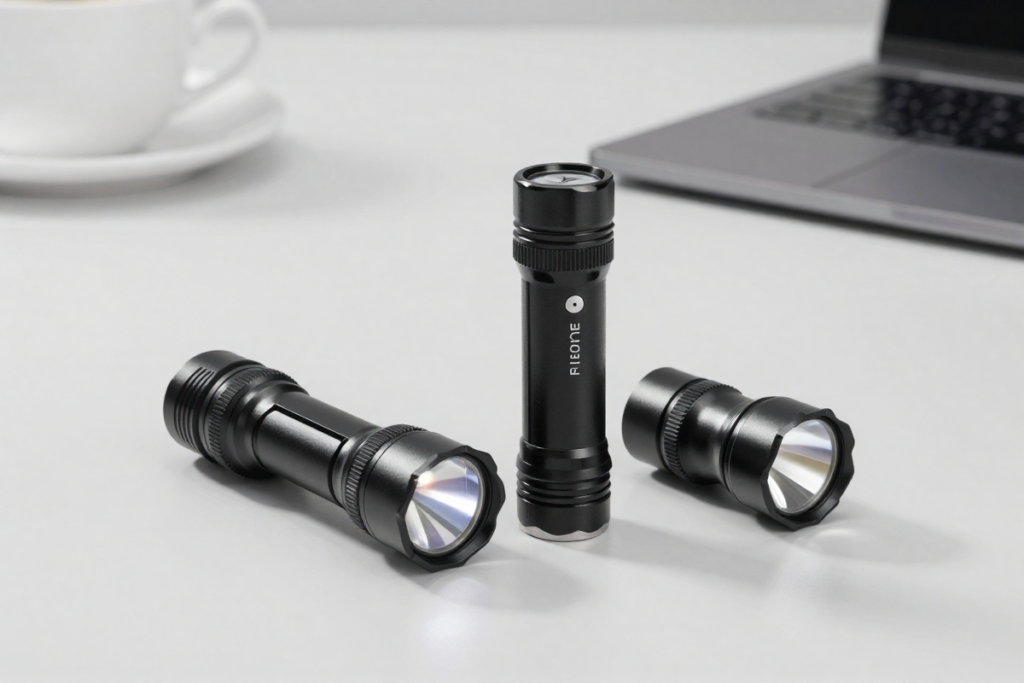
If knives are the foundation of EDC gear, pocket flashlights are the unsung heroes—until you’re in the dark and grateful you have one.
Why Your Phone’s Flashlight Isn’t Enough
Yes, your smartphone has a flashlight. But it drains your battery in emergencies, offers inconsistent beam quality, and doesn’t preserve your night vision. A dedicated EDC flashlight delivers tactical safety, extended range, and battery independence—especially when you need it most.
The Flat Light Trend: A 2026 Game Changer
In 2025-2026, the flat light trend revolutionized pocket flashlight design. Instead of traditional round tubular designs that print conspicuously in jeans pockets, brands like Nitecore, Olight, and others developed ultra-pocketable “flat lights” that lay flush against your thigh.
Models like the Nitecore EDC27 or Olight ArkPro Mini represent the pinnacle of this category—compact form factor, serious lumens output, and zero pocket printing.
Key Flashlight Specs to Look For
How many lumens do you actually need?
The answer: 300 to 1,000 lumens for pocket-sized EDC flashlights. Below 300 lumens, you’re essentially carrying a toy. Above 1,000 lumens, you’re getting diminishing returns in a pocket-sized package—and significant heat/runtime penalties.
USB-C Rechargeable vs. Battery-Powered:
Modern rechargeable EDC flashlight designs with USB-C interfaces eliminate the need for disposable batteries—a game-changer for daily carry. Look for models with battery-level indicators and reasonable runtime (4-8 hours typical).
CRI (Color Rendering Index) & IP68 Ratings:
CRI measures how accurately a light renders colors (important for inspection tasks). IP68 waterproof ratings mean your flashlight survives submersion, not just splashes. Both matter more than you’d think for actual use cases.
Pocket Management: Slim Wallets, Organizers & EDC Pens
Once you’ve selected your knife and flashlight, managing the rest of your EDC items becomes critical. A poorly organized pocket becomes a jumble of scratched gear and confused fingers fumbling for your phone.
Slimming Down: The Best Front Pocket EDC Wallets
The days of bulky leather bifolds are dead. Modern EDC wallets prioritize minimalism and RFID protection.
Best Front Pocket EDC Wallets:
[Ridge Wallet (Titanium/Carbon Fiber)] – The gold standard for minimalist, durable wallets. RFID-blocked, slim enough for tight jeans, and built to last a decade. Expect premium pricing.
Other solid options include Trayvax wallets and Herschel compact designs—each targeting slightly different aesthetics while maintaining the core minimalist philosophy.
Restoring Pocket Order: EDC Pouches & Organizers
An EDC pouch or leather pocket organizer (like Hitch & Timber pocket organizer) prevents your gear from clattering together, creating a distinct “pocket dump” that looks intentional rather than chaotic.
The Might of the Tactical EDC Pen
Don’t overlook the humble pen. A quality EDC pen serves critical functions: signing documents, emergency glass breaking (tactical models feature hardened steel tips), and writing in situations where your phone isn’t practical.
Best Pick: Fisher Space Pen – Pressurized ink cartridge writes upside down, in extreme temperatures, and in near-zero gravity. A legendary choice that never disappoints.
Curated EDC Loadouts (Targeting Specific Audiences)
Every person’s ideal EDC setup differs based on lifestyle, profession, and personal philosophy. Here are four curated EDC loadouts to inspire your own configuration.
Loadout #1: The Minimalist Setup
Philosophy: Maximum utility, absolute minimum footprint. Fits in tight jeans without printing.
Gear:
- [Lightweight folding knife (CJRB Pyrite)]
- [Ultra-compact keychain flashlight]
- [Ridge Wallet]
- Optional: EDC pen or EDC pry bar
Weight: Under 3 ounces. Pocket Real Estate: Minimal. Cost: $100-150.
Loadout #2: The Office & Tech Professional

Philosophy: Sleek, non-threatening “gray man carry” designs. Blends seamlessly into corporate environments while maintaining functionality.
Gear:
- [Premium EDC knife (Benchmade Bugout)]
- [Rechargeable USB-C flashlight]
- [Titanium wallet]
- [Fisher Space Pen]
- Optional: Compact multitool (blade-less for TSA compliance if traveling)
Aesthetic: Professional, premium materials, muted colors (silver, black, natural patina). Cost: $300-600.
Loadout #3: Everyday Carry for Women
Philosophy: Bag-organized carry prioritizing safety, versatility, and accessibility.
Gear:
- [Compact EDC knife (ambidextrous, small profile)]
- [Flat-profile pocket flashlight]
- [Slim wallet with RFID Blocking]
- [Personal safety item (pepper spray or personal alarm)]
- Optional: Keychain multitools, emergency whistle, hand-warmers
Organization: Dedicated EDC pouch inside primary bag for easy access. Cost: $150-400 (varies with safety gear).
Loadout #4: The Urban Preparedness & First Aid Kit
Philosophy: Integrating compact life-saving tools alongside utility gear.
Gear:
- [Reliable EDC knife]
- [High-output EDC flashlight (300+ lumens)]
- [Compact tourniquet]
- [First aid essentials (trauma shears, gauze, duct tape)]
- [EDC organizer pouch]
- Optional: Emergency whistle, signaling mirror, basic medications
Focus: Dual-purpose items when possible. A knife handles both utility and emergency tasks. Cost: $200-500.
A Step-by-Step Guide: How to Build Your EDC From Scratch
Starting your EDC journey can feel overwhelming. Here’s a proven roadmap to build your personalized kit without analysis paralysis.
Step 1: Audit Your Daily Routine
Before you buy anything, observe your actual daily life for one week:
- What tasks do you perform most frequently? (Opening packages, securing items, finding keys in darkness?)
- What situations frustrate you? (Needing scissors but not having them? Phone battery dying?)
- What items do you currently carry that rarely get used?
Document this ruthlessly. Your EDC essentials should solve real problems in your real life—not theoretical scenarios.
Step 2: Set Your Budget
The Tiered Pricing Matrix:
Beginner Loadout ($80-150):
- Budget knife ($30-50)
- Keychain flashlight ($15-30)
- Basic wallet ($25-40)
Mid-Tier Loadout ($250-400):
- Premium knife ($80-150)
- Quality flashlight ($50-80)
- RFID wallet ($40-60)
- Additional tools/accessories ($80-100)
Premium Titanium Loadout ($500-1,500+):
- Ultra-premium knife ($150-300+)
- Premium flashlight ($80-150)
- Titanium wallet/organizer ($60-120)
- Specialized tools, multitools, accessories ($200-800+)
Decide where you fall. Honest financial planning prevents buyer’s regret.
Step 3: Prioritize Portability and Comfort
The fundamental rule: The best EDC gear is the gear you actually carry every day. If it’s too heavy, too bulky, or too uncomfortable, it stays home.
This explains why ultra-minimalist setups (knife + flashlight + wallet) often outperform over-equipped rigs. Weight and bulk create friction—friction prevents consistent carry.
Frequently Asked Questions (FAQs)
General EDC Questions
What is everyday carry (EDC)? Everyday Carry is the practice of selecting and carrying practical items that serve your daily routine—balancing minimalism (carrying only what you use) with preparedness (being ready for unexpected tasks).
What does EDC stand for? EDC stands for Everyday Carry, referring to the items you intentionally carry on your person daily.
What are the essential items for an everyday carry kit? The core trinity is: knife, light, and wallet. Everything else depends on your lifestyle. Some add a multitool, pen, or first aid essentials.
Why is everyday carry important? EDC embodies the philosophy of self-reliance and preparedness. Quality EDC gear prevents you from becoming dependent on others to solve minor daily problems.
Is it legal to carry a pocket knife every day? This depends entirely on your jurisdiction. Legal EDC knife blade length by state varies dramatically. Always verify local laws before carrying.
What is the point of carrying EDC gear? Practical utility. Opening packages, cutting tasks, finding items in darkness, emergency preparedness. Quality gear solves problems before they become crises.
What is a pocket dump? A “pocket dump” is a photograph or display of everything you carry in your pockets, typically shared in the EDC community for feedback and inspiration.
Is EDC the same as survival gear? No. EDC items serve daily utility. Survival gear or “bug-out bags” anticipate prolonged emergency scenarios. EDC is about everyday practicality.
EDC Knife Questions
What is the best EDC knife? The “best” depends on your needs, but legendary choices include Benchmade Bugout, Spyderco Para 3, and Gerber Fastball.
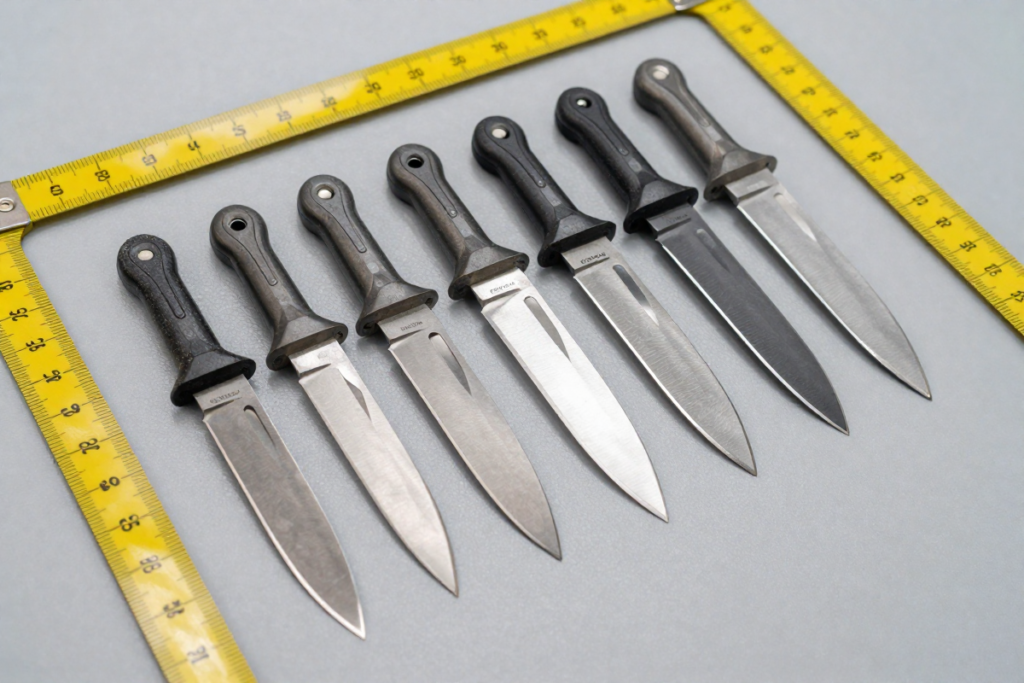
What size knife is best for everyday carry? 2.5″ to 3.5″ blade length balances utility with discretion. Verify legal EDC knife blade length by state first.
What blade steel is best for an EDC knife? S35VN, MagnaCut, and M390 offer excellent edge retention. Budget carriers appreciate D2 tool steel despite lower corrosion resistance.
How long of a blade can I legally carry? This varies dramatically by state—from unlimited to 2.5″ maximum. Check AKTI.org for your jurisdiction.
EDC Flashlight Questions
How many lumens do I need for an EDC flashlight? 300 to 1,000 lumens covers most daily scenarios. Below 300 feels inadequate; above 1,000 creates excessive heat and runtime penalties in pocket-sized packages.
Is a rechargeable or battery-powered flashlight better for EDC? USB-C rechargeable models are superior for consistent carry (no battery anxiety). Traditional AAA options work too but require backup batteries.
What battery type is best for EDC flashlights? USB-C rechargeable designs eliminate this question. If choosing batteries, 18650 lithium cells outperform AAA but require chargers.
EDC Multitool Questions
Leatherman or Gerber – which is the better EDC multitool? Leatherman emphasizes quality and warranty. Gerber offers competitive features at lower prices. Both are legitimate choices depending on budget.
Can I take a multitool through airport security? Only blade-less multitools can transit in carry-on luggage. All multitools with blades must be checked.
Is a multitool better than carrying a knife? It’s a different choice, not a better one. Multitools sacrifice blade efficiency for versatility. Use what matches your daily needs.
Conclusion: Join the Community
Everyday carry is deeply personal. Your ideal EDC loadout emerges through trial, error, refinement, and genuine self-knowledge. The minimalist who carries three items is not more or less committed than the enthusiast with twelve. Both have made intentional choices aligned with their lives.
The beautiful part of the EDC community? You’re never truly done. Gear evolves, your lifestyle changes, new innovations emerge—and the joy of carry is the constant optimization of your personal kit.
Your Challenge:
What do you carry in your pockets every day, and why? Share your “pocket dump” photos in the comments below. Tell us about the items you rely on, the gear you love, and the pieces that surprised you with their utility. Your insight might inspire another reader to discover their own perfect carry setup.
The EDC community thrives on shared knowledge and genuine passion for the gear that makes daily life more capable, more prepared, and more intentional.
What’s in your pockets?
Disclaimer: This article contains affiliate links. If you purchase an item through the link I will earn a small commission at no extra cost to you.
No Responses