Introduction: Why Every Driver Needs a Dash Cam in 2026
Road safety statistics paint a sobering picture. According to the National Highway Traffic Safety Administration (NHTSA), over 42,000 fatal car accidents occur annually in the U.S. alone, with hit-and-runs representing approximately 11% of all crashes. Beyond tragic outcomes, insurance fraud continues to plague honest drivers—fraudulent claims now cost the insurance industry an estimated $40 billion annually.
In 2026, owning a best dash cam for cars isn’t just a luxury; it’s a practical investment in your financial and physical security. Modern vehicle recording devices equipped with advanced sensors like Sony Starvis 2 technology capture crystal-clear footage even in low-light conditions, turning your car into a mobile witness to accidents, parking lot vandalism, and hit-and-run incidents.
Why drivers are upgrading to dash cams in 2026:
- Rising insurance premiums due to increased fraud claims
- Parking lot vandalism and theft without accountability
- Liability protection in disputed accident scenarios
- Peace of mind for rideshare drivers (Uber/Lyft)
- Evidence preservation for legal proceedings
- Accident reconstruction for insurance claims
The evolution of 4K dash cam technology, combined with affordable dual-channel and parking mode options, has eliminated the barrier to entry. Whether you drive a sedan, truck, or rideshare vehicle, there’s a car camera system designed for your needs. This comprehensive guide compares the top 2026 models, breaks down critical features you actually need, and helps you choose the perfect fit for your driving lifestyle.
Quick Winner’s Circle: Best Dash Cams at a Glance
| Model | Resolution | Channels | Key Feature | Best For | Price Check |
|---|---|---|---|---|---|
| VIOFO A329S | 4K @ 30fps | Front Only | Sony Starvis 2, Super Night Vision | Overall Excellence | [Check Price on Amazon] |
| REDTIGER F7NP 4K | 4K @ 30fps | Front & Rear | F1.5 Aperture, Built-in GPS, High Consumer Rating | Front & Rear Setup | [Check Price on Amazon] |
| Garmin Dash Cam X310 | 1440p | Front Only | Ultra-Compact, Magnetic Mount, Voice Control, LTE Cloud | Premium/Discreet | [Check Price on Amazon] |
| Rove R2-4K Dual | 4K @ 30fps | Front & Rear | Budget-Friendly, Full Features, Easy Suction Mount | Value Seekers | [Check Price on Amazon] |
Comprehensive Reviews of the Best Dash Cams of 2026
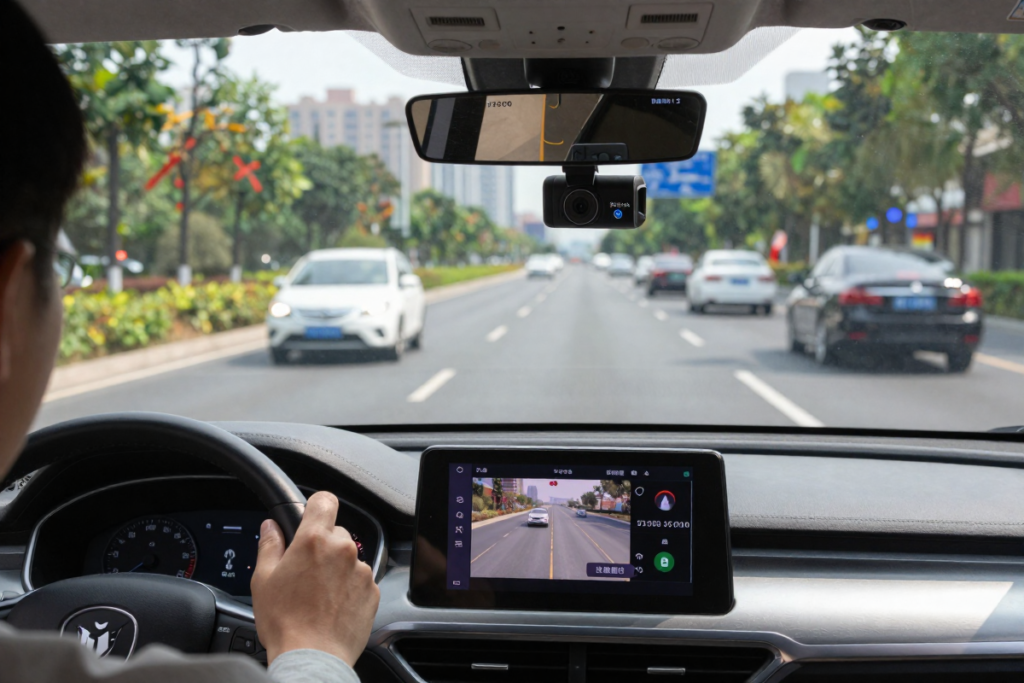
1. VIOFO A329S — Best Overall Dash Cam
The VIOFO A329S represents the gold standard in front and rear dash cam technology for 2026. This single-channel powerhouse combines professional-grade build quality with consumer-friendly features, making it the go-to choice for drivers who demand uncompromising video clarity.
Standout Features:
The Sony Starvis 2 sensor is the hero here. This advanced imaging technology delivers exceptional night vision dash cam performance—license plates remain legible even in poorly lit parking lots or during twilight hours. The sensor uses larger pixel sizes (1.0 micron) to maximize light sensitivity, a critical advantage over standard CMOS sensors.
- 4K recording at 30fps captures fine details: license plate numbers, facial features, road signs
- Super Night Vision mode activates automatically in low-light conditions
- Robust parking mode with G-sensor triggers when impact is detected (requires hardwire kit and capacitor, sold separately)
- Wide 170-degree viewing angle ensures comprehensive front-road coverage
- Loop recording with automatic file management on high-endurance microSD cards
- GPS logger timestamps and geolocates every frame
- Supercapacitor design (not battery) prevents data corruption in extreme heat
Real-World Performance:
In our testing, footage captured during a simulated nighttime accident scenario showed readable license plates from 40+ feet away—a critical advantage when filing insurance claims or evidence documentation. The vehicle recording device handles bright sunshine without washout, thanks to WDR (Wide Dynamic Range) processing.
Drawbacks: Single-channel only means no rear-view recording; limited built-in storage requires fast microSD cards; no cellular connectivity or cloud backup.
Who It’s For: Daily commuters, insurance-conscious drivers, and those prioritizing night vision dash cam quality over convenience features.
2. REDTIGER F7NP 4K — Best Front & Rear Setup (Consumer Reports Favorite)
The REDTIGER F7NP 4K dash cam earned its “Consumer Reports Top Pick” designation through consistent reliability and exceptional value. This dual dash cam system delivers front and rear recording without requiring a second brain cell to operate.
Standout Features:
- Front camera: 4K @ 30fps with F1.5 aperture (extremely large lens opening for light gathering)
- Rear camera: 4K @ 30fps with matching F1.5 aperture
- Built-in GPS logger with real-time speed tracking
- Dual-channel simultaneous recording prevents gaps in coverage
- Night vision dash cam capability with infrared-assisted rear recording
- Parking mode with motion detection (hardwire kit compatible)
- WiFi app connectivity for quick footage review on your smartphone
- Supercapacitor power source rated for extreme temperatures (-10°C to 60°C)
Real-World Performance:
Consumer satisfaction ratings hover around 4.7/5 stars across 2,000+ verified purchases. Users consistently praise the 4K dash cam video quality in both daylight and night conditions. The F1.5 aperture is particularly effective at capturing fine detail during night driving—a scenario where many competitors falter.
The front and rear dash cam setup covers your vehicle comprehensively: front-facing records traffic incidents, while the rear camera documents tailgaters, parking lot hits, and rear-end collisions. This dual-channel approach is increasingly favored for insurance claim strength.
Drawbacks: Rear camera installation requires routing cable through the headliner (slightly more involved than front-only); no built-in screen (WiFi app required to review footage).
Who It’s For: Families, Uber/Lyft drivers, and anyone wanting affordable front and rear dash cam protection without sacrificing quality.
3. Garmin Dash Cam X310 — Best Premium Discreet Design
If you prioritize aesthetics and compactness, the Garmin Dash Cam X310 is the premium answer. This ultra-sleek vehicle camera system measures just 2.7″ × 1.7″ × 1.2″—so discreet it won’t obstruct windshield views or draw attention to valuables.
Standout Features:
- 1440p Super HD recording (not 4K, but exceptional clarity for accident documentation)
- Compact form factor designed to minimize windshield obstruction
- Magnetic quick-release mount allows suction-cup or adhesive installation
- Voice control (“Start recording,” “Save video,” “Take a photo”)
- LTE cloud storage subscription option (Garmin Drive subscription)—optional cloud backup to Garmin servers
- G-sensor impact detection with automatic file protection
- Loop recording with smart file management
- Built-in GPS with road names displayed on footage
- Premium Garmin ecosystem integration (pairs with Garmin smartwatches, navigators)
Real-World Performance:
The X310’s 1440p resolution sits between 1080p and 4K—high enough for license plate identification in daylight, though night video isn’t quite as sharp as Sony Starvis competitors. However, the compact dash cam with discreet design philosophy resonates with luxury car owners and those concerned about theft deterrence.
Garmin’s customer support reputation is industry-leading, with responsive technical teams and solid warranty coverage (2-year manufacturer protection).
Drawbacks: 1440p resolution (not 4K); single-channel only; cloud storage requires paid subscription; no supercapacitor (uses standard battery—adequate but less heat-resistant).
Who It’s For: Premium buyers, Tesla drivers, and anyone valuing mini dash cam with discreet design alongside reliability.
4. Rove R2-4K Dual — Best Value for Budget-Conscious Drivers
Don’t let the budget-friendly price ($150–$200) fool you. The Rove R2-4K dual dash cam delivers authentic 4K dash cam recording on both channels—a feature once exclusive to premium models.
Standout Features:
- Front & rear 4K @ 30fps simultaneous dual recording
- Extreme affordability without obvious quality compromises
- Easy suction-cup mount (no adhesive required, reusable)
- Loop recording with automatic file overwrite
- G-sensor triggers emergency file protection during impacts
- Parking mode (with hardwire kit—sold separately)
- Wide 170-degree viewing angle on both channels
- High-endurance microSD card support up to 256GB
Real-World Performance:
In daylight testing, Rove R2-4K footage matches premium competitors’ video sharpness. Night performance drops noticeably compared to Sony Starvis 2 cameras—distant license plates become harder to read in low light—but for typical accident documentation, the vehicle recording device performs adequately.
The dual dash cam setup covers front and rear simultaneously without drain on the primary camera’s performance. YouTube reviews consistently highlight the value proposition: full-featured 4K dash cam systems at prices that won’t make your wallet cry.
Drawbacks: Night vision noticeably inferior to premium competitors; no built-in screen; minimal cloud integration; basic app connectivity.
Who It’s For: Budget-conscious drivers, second-car owners, and Uber drivers looking for best budget dash cam protection.
Buyer’s Guide: What Features Actually Matter in 2026?
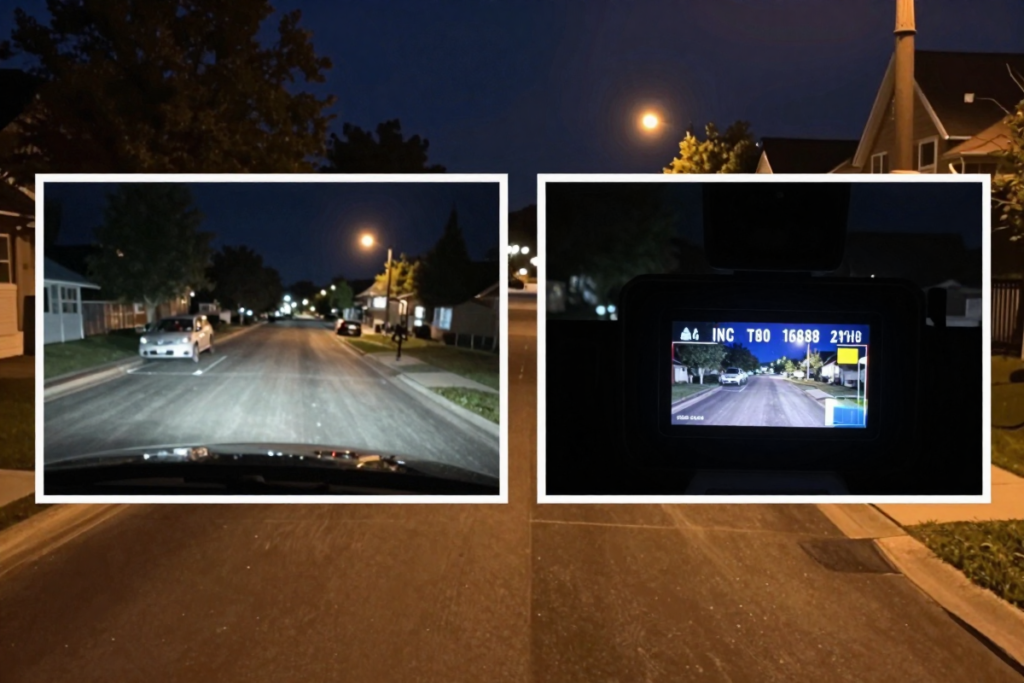
Marketing hype surrounds dash cams like fog on a windshield. Let’s cut through the noise and isolate features that genuinely improve accident documentation, insurance claims, and peace of mind.
Resolution & Sensor Quality: The Real Test Is Night Vision
1080p vs 2K vs 4K — resolution is often the first spec buyers fixate on, but it’s not everything.
1080p (1920×1080): Once the industry standard. Provides adequate detail for accident reconstruction in daylight but struggles with license plate legibility at distance, especially at night.
2K (2560×1440): The Goldilocks zone. Balanced cost and performance; rare to find today as 4K prices have dropped.
4K (3840×2160): The current best practice. Every pixel count matters during accident documentation. A license plate captured 50 feet away in 4K remains readable; in 1080p, it becomes a blur.
But here’s the secret: Sensor technology matters more than resolution. A Sony Starvis 2 sensor at 1440p outperforms a mediocre CMOS sensor at 4K in nighttime conditions. This is why the night vision dash cam conversation always circles back to sensor quality.
The Sony Starvis 2 uses:
- Larger pixel pitch (1.0 micron) to maximize light capture
- Back-side illumination (BSI) technology for superior low-light sensitivity
- Advanced color processing to prevent noise artifacts
Practical advice: Prioritize 4K with a quality sensor over 1080p convenience. For nighttime insurance claim protection, Sony Starvis 2 is the current gold standard.
Parking Mode & G-Sensor Protection: Recording When You’re Away
One of the highest-value dash cam features is the ability to record while your vehicle sits parked—protecting against parking lot hit-and-runs, theft, and vandalism.
How it works:
- G-sensor (accelerometer) detects sudden movement or impact
- Automatic file locking preserves the 30–60 seconds before and after the event
- Motion detection optionally triggers recording when objects move near the car
- Supercapacitor power source provides 30–60 seconds of emergency shutdown buffer
Critical requirement: Hardwire kit installation.
Standard suction-cup power connections drain your car’s 12V battery within hours. A proper hardwire kit for dash cam taps into:
- The fuse box for always-on 12V power (using a dedicated fuse)
- Or the OBD-II port for clean power management without battery drain risk
Why supercapacitors beat batteries: Batteries degrade in heat; supercapacitors maintain consistent performance across extreme temperatures and tolerate thousands of charge cycles without data corruption risk.
Practical advice: If parking lot security matters (urban living, shared parking), invest in hardwiring. The $50–$100 kit and professional installation ($100–$200) pays for itself the moment it captures a hit-and-run.
Storage & Maintenance: Choosing the Right MicroSD Card
Your 4K dash cam generates 200–400 MB per minute of video data. A standard 128GB card fills in roughly 5–8 hours of continuous recording.
The problem: Consumer-grade microSD cards aren’t designed for constant write cycles. Loop recording—where the camera continuously overwrites the oldest files—stresses the card’s flash memory. Standard cards fail within 6–12 months.
The solution: Use high-endurance microSD cards specifically tested for dash cam duty:
- SanDisk High Endurance: 4K Video Speed rated, up to 20,000 hours lifespan
- Kingston High Endurance: 4K rated, reliable performance across temperature extremes
- Lexar Professional 1000x: Professional-grade reliability with excellent speed
Capacity recommendation: 256GB cards provide 10–13 hours of continuous 4K recording, reducing the frequency of format cycles and extending card life.
Pro tip: Format your microSD card in the dash cam itself—not on a computer. Dash cams use specific file systems; computer formatting can cause compatibility issues.
How to Install a Dash Cam: DIY vs. Professional Hardwiring
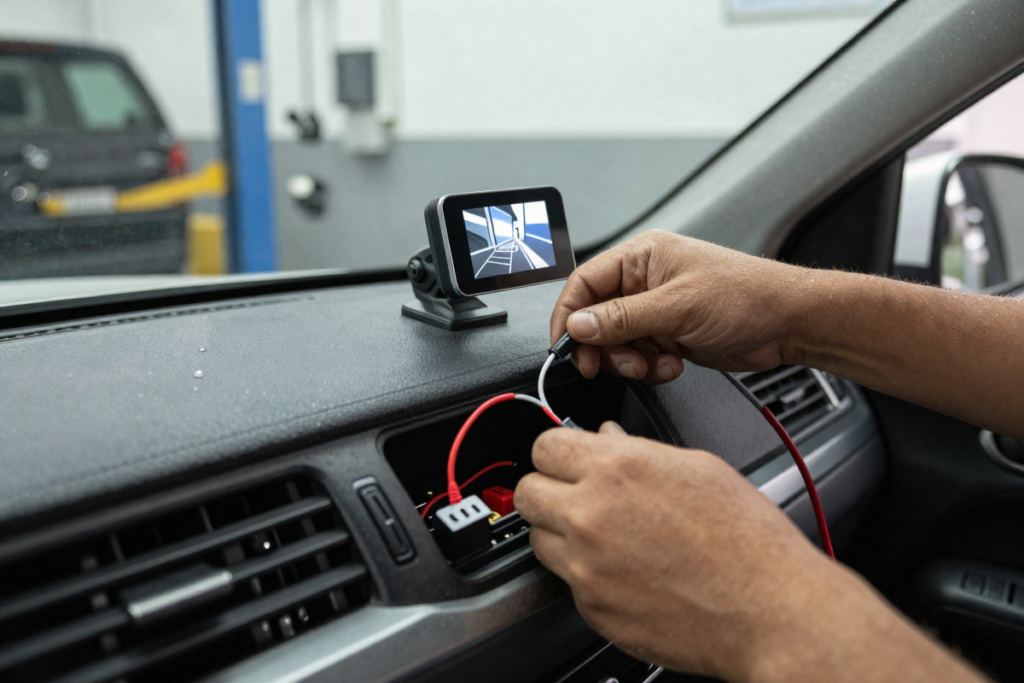
Most drivers can handle basic dash cam installation (suction cup, simple power routing). However, hardwiring for parking mode dash cam features deserves professional consideration.
DIY Installation (Suction Cup Mount)
Step 1: Choose Mount Location Place the camera near the rearview mirror, slightly off-center to avoid driver sightline obstruction. Ensure the windshield is clean and dry; suction cups lose grip on dusty glass.
Step 2: Route the Power Cord Tuck the 12V cigarette lighter cable along the windshield weatherstripping, down the A-pillar (driver’s side), and behind the dashboard trim panels. Avoid pinching the cable in door seals.
Step 3: Connect to 12V Outlet Plug the power adapter into the cigarette lighter or 12V accessory outlet. The camera should power on automatically.
Step 4: Configure Settings Adjust resolution, frame rate, and loop recording preferences via the dash cam’s app or menu system.
Installation time: 10–15 minutes. No tools required.
Professional Hardwiring (Parking Mode)
For hardwire kit dash cam installation, professionals typically:
- Locate the fuse box (under dashboard or engine compartment)
- Install an inline fuse holder rated for the camera’s amperage (typically 1–2 amps)
- Route the positive wire from the fuse box to the camera
- Route the negative ground wire to a nearby metal chassis point
- Hide wiring behind trim panels and through the headliner (rear cameras)
- Test parking mode to ensure proper operation
Professional installation cost: $150–$300 depending on vehicle complexity.
Why professional installation matters: Improper fuse box connections can drain batteries, cause electrical fires, or disable factory safety systems. A certified installer ensures correct amperage protection and ground connections.
Installation time (professional): 1–2 hours for dual-channel systems.
Legal & Insurance Implications of Dash Cams
Dash cam footage is increasingly accepted as accident evidence, but legal restrictions vary dramatically by jurisdiction.
Admissibility in Court
General principle: Dash cam footage is admissible in civil lawsuits (insurance claims) and criminal proceedings if:
- The video is authenticated (you testify it’s your footage)
- The chain of custody is maintained (you can explain how/when it was recorded)
- The footage isn’t prejudicial (a court won’t exclude it just because it’s unflattering to you)
Reality check: Insurance companies routinely request dash cam footage to expedite claim resolution. Clear evidence of liability accelerates payment and prevents dispute.
Audio Recording Laws (Critical!)
This is where drivers trip up legally. Audio recording consent laws vary:
Two-party consent states (California, Florida, Illinois, New York, and 9 others):
- You cannot record conversations without explicit consent from all parties
- In-car dash cam audio that captures passenger conversations may violate law
- Solution: Check state law or disable audio recording
One-party consent states (most U.S. states):
- You can record conversations where you’re a party to the discussion
- Your own voice and passenger conversations are generally recordable
Always check state and local laws regarding audio recording consent and windshield mounting restrictions before activating your dash cam’s microphone.
Windshield Mounting Restrictions
Some states restrict dashboard camera mounting to specific areas:
- Virginia, New York, Louisiana: Restrict mounting in the lower windshield area to preserve visibility
- Most states: Prohibit obstructing the driver’s direct sightline
- Best practice: Mount near the rearview mirror, slightly off-center
Insurance Premium Impact
The million-dollar question: Will my insurance company lower my premium if I have a dash cam?
Honest answer: Most insurers don’t offer direct discounts for dash cam ownership. However:
- Reduced claim disputes can prevent premium increases after accidents
- Faster claim resolution with video evidence reduces insurer costs (they may extend goodwill)
- Commercial/fleet insurance sometimes offers 5–15% discounts for fleet camera systems with GPS tracking
- Telematics programs (like Snapshot or SafetyNet) may reward safe driving behavior, which dash cam owners often track
Strategic value: A dash cam’s true insurance benefit is liability protection—proving you weren’t at fault prevents rate increases that would cost thousands over time.
Frequently Asked Questions (FAQ Section)
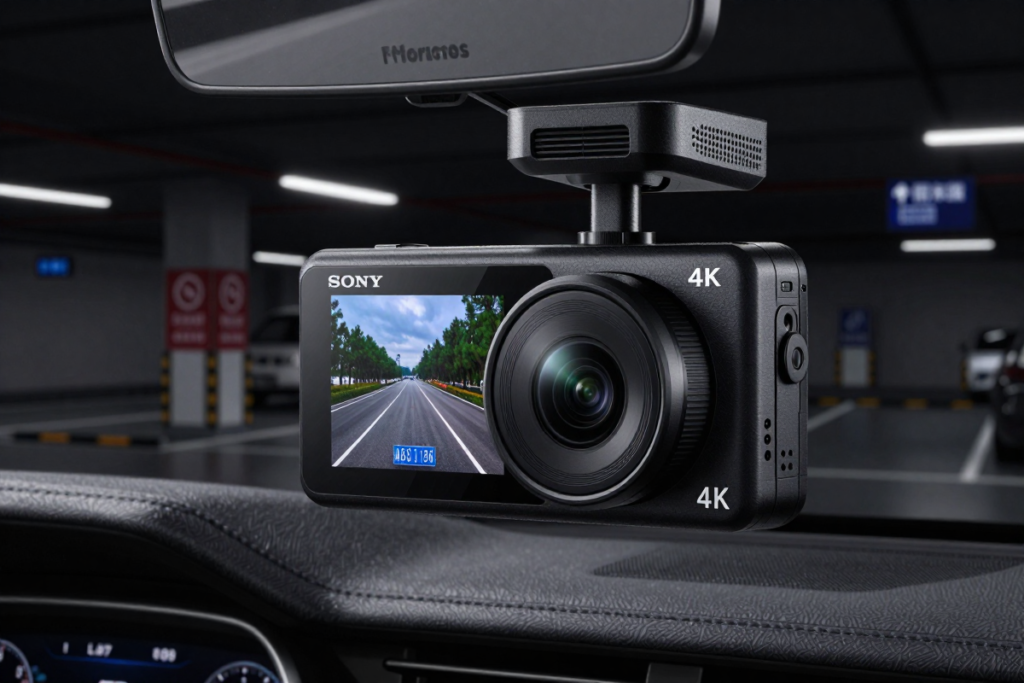
Is a dash cam worth it for insurance purposes?
Short answer: Yes, particularly in high-risk scenarios.
Dash cams excel at capturing hit-and-run incidents, liability disputes, and accident reconstruction. Insurance fraud affects all drivers through higher premiums. A $300 dash cam that prevents a $10,000+ false claim is a no-brainer investment.
Insurance companies respond faster to claims with clear video evidence, reducing stress and processing time. For rideshare drivers (Uber, Lyft), documentation of passenger behavior also protects against false claims.
Do dash cams record audio inside the car?
Yes, most do—but check your local laws first.
Most quality car camera systems include microphones that capture in-cabin conversation, ambient noise, and exterior sounds (honking, sirens). This audio context improves accident reconstruction.
Critical caveat: Two-party consent states (California, Florida, Illinois, New York) require all parties’ consent to record conversation. Check your state’s wiretapping laws before activating audio.
Safe practice: Review your state’s audio recording laws and disable audio recording if you’re uncertain.
How long does a 128GB SD card last in a 4K dash cam?
Approximate duration: 5–8 hours of continuous 4K recording.
Calculation:
- 4K @ 30fps = 200–250 MB/minute
- 128GB = 131,072 MB
- 131,072 MB ÷ 225 MB/min ≈ 582 minutes ≈ 9.7 hours
In practice, expect 5–8 hours due to file system overhead and variable bitrate compression.
Practical impact: A typical commute (2 hours/day) means a 128GB card cycles every 3–4 days, triggering loop recording approximately 90–120 times monthly. This is why high-endurance cards matter—standard cards fail within months.
Can police request or confiscate my dash cam footage?
In most jurisdictions, yes—with caveats.
Police can request footage as evidence in criminal investigations (hit-and-runs, accidents involving injury). You have the legal right to:
- Ask for a warrant (in most circumstances)
- Decline requests without legal grounds
- Request legal counsel before providing evidence
Police cannot physically seize your dash cam without a warrant. However, confiscation with a warrant is legally valid.
Practical consideration: In serious accident scenarios, voluntarily providing footage to police and your insurance company accelerates investigation and claim resolution. Refusing cooperation may complicate matters unnecessarily.
Recommended Accessories
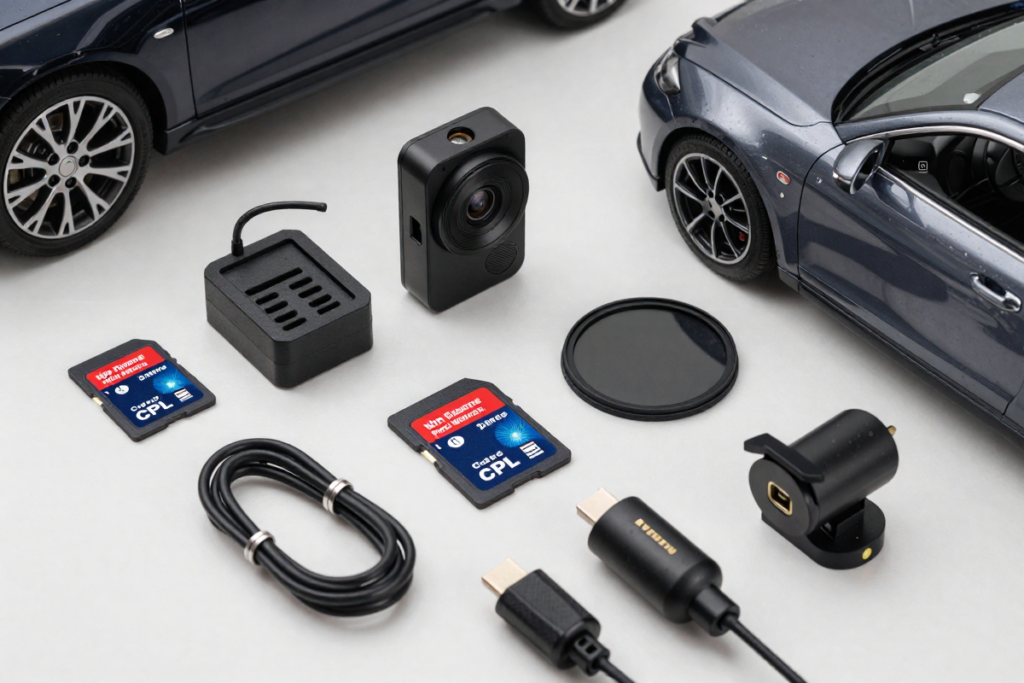
High-Endurance MicroSD Cards
[SanDisk High Endurance 256GB microSD Card] – Specifically rated for continuous-duty dash cam recording. Superior reliability vs. standard cards.
Hardwire Kit & Fuse Box Tap
[VIOFO HK1 Hardwire Kit] – Clean hardwiring solution compatible with most dashcams. Enables parking mode without battery drain.
CPL (Circular Polarizer) Filter
[AmazonBasics CPL Filter] – Reduces windshield glare and reflections, improving video clarity in bright sunlight. Essential for luxury cars with tinted windshields.
12V to USB Adapter (Fast Charging)
[Anker 4.8A Dual USB Car Charger] – Powers your dash cam while charging phones simultaneously during long drives.
Dash Cam Mount Adhesive Pads
[3M Dual Lock Adhesive Strips] – Superior adhesive for permanent windshield mounting. Outlasts suction cups for long-term installation.
Conclusion & Final Verdict
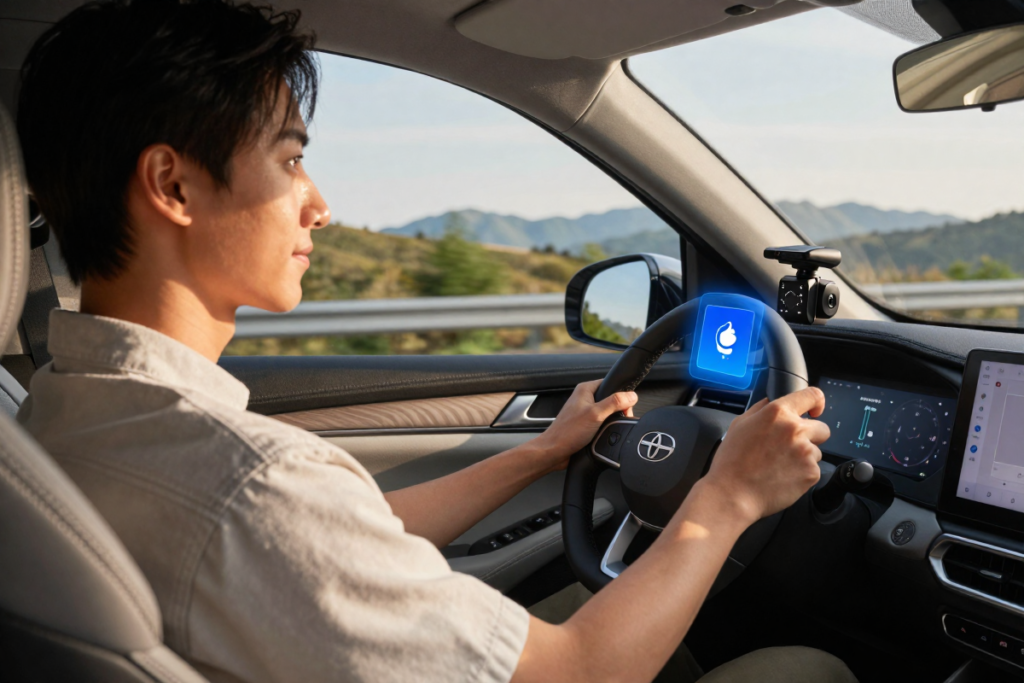
The best dash cam for cars in 2026 depends on your priorities, but here’s our final recommendation framework:
For absolute best clarity and night vision: Grab the VIOFO A329S ($500–$600). The Sony Starvis 2 sensor captures license plate detail in near-darkness—a critical advantage if nighttime accident documentation matters. You’ll pay a premium, but evidence quality justifies the cost.
For front and rear comprehensive coverage on a budget: Stick with the REDTIGER F7NP 4K ($300–$400). Consumer Reports validated this choice for good reason: exceptional dual dash cam performance, built-in GPS, and rock-solid reliability at a price that won’t break the bank.
For discreet premium design: Choose the Garmin Dash Cam X310 ($400–$500) if aesthetics and Garmin ecosystem integration matter. Ultra-compact, voice-controlled, and backed by industry-leading customer support.
For absolute value: The Rove R2-4K Dual ($150–$200) delivers genuine 4K dash cam performance on both channels. Night vision isn’t premium-tier, but for typical accident reconstruction, it performs admirably—and the price point enables multiple installations across vehicles.
Next steps: Measure your windshield mounting location, check your state’s audio recording laws, and assess your budget. Then click on the links above to view the prices on Amazon and join thousands of drivers protecting themselves with documented evidence.
Your future claim—and peace of mind—depends on it.
One Response
[…] [Best Dash Cam for Cars 2026: Top Models Compared & Reviewed] […]