Introduction
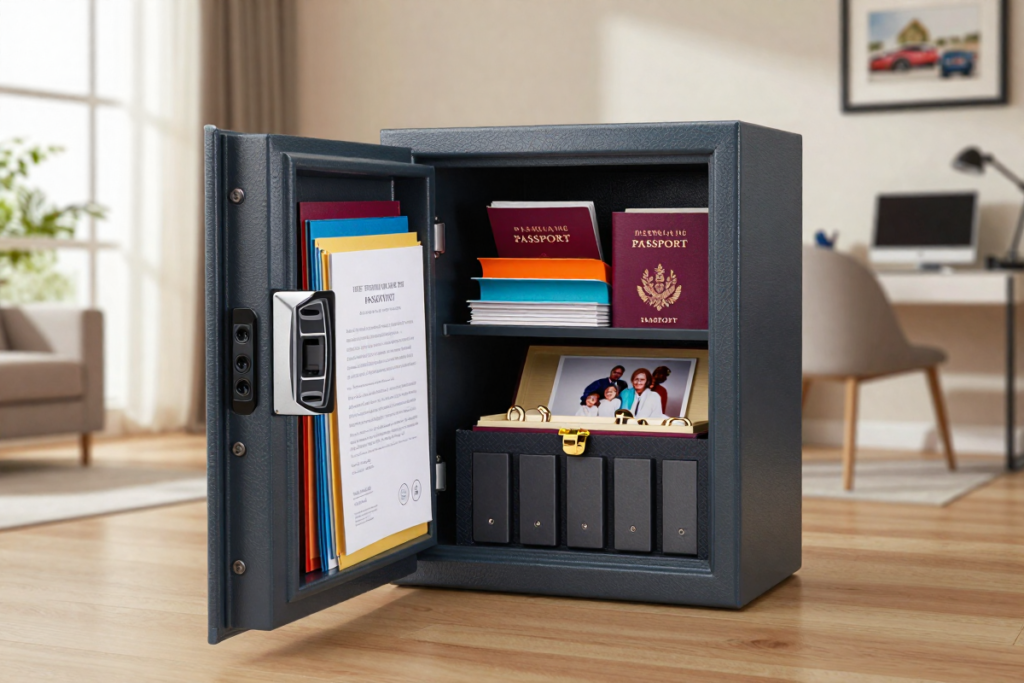
Imagine having only 5 minutes to evacuate your house during an emergency. Would you be able to grab your birth certificate, home deed, and irreplaceable family heirlooms? For most homeowners, the answer is a sobering “no.”
The reality is that most people leave their most vital paperwork unprotected—tucked away in a desk drawer, filing cabinet, or simple cardboard box. This leaves them vulnerable to devastating loss from unexpected theft, fires, or floods. According to the National Fire Protection Association, a house fire is reported every 93 seconds in the United States, and flooding affects millions of homes annually. When disaster strikes, the loss of critical documents can create months or even years of hardship trying to replace everything from identity papers to legal records.
The good news? Investing in a robust, multi-layered home storage system offers ultimate peace of mind and protects what matters most.
This comprehensive guide covers everything you need to know about safe storage for documents and valuables, including:
- A detailed review of the top-rated home safes for different budgets and needs
- How to decipher technical fire and water certifications (and why they matter)
- Smart placement tactics to maximize security
- Alternative off-site storage options and when to use them
- Maintenance tips to prevent humidity damage and ensure long-term protection
Whether you’re protecting legal documents, family heirlooms, or digital media backups, this guide will help you make an informed decision about the best safe storage solution for your home.
The Critical Checklist: What Documents & Valuables Need Safe Storage?
Before choosing a home safe, it’s essential to identify exactly what you need to protect. Not all documents and valuables have the same storage requirements, and understanding what’s at risk helps you select the right size and type of safe.
Category 1: Irreplaceable Legal & Personal Identity Documents
These are the documents that are extraordinarily difficult or time-consuming to replace if lost or destroyed:
- Birth certificates, Social Security cards, and adoption paperwork – Core identity documents required for everything from passport applications to employment verification
- Passports and active travel documentation – Essential for international travel and often needed on short notice
- Original copies of last wills, testaments, powers of attorney, and estate planning folders – Legal documents that protect your wishes and your family’s future
- Marriage certificates and divorce decrees – Required for legal name changes, benefits claims, and remarriage
- Military discharge papers (DD-214) – Necessary for accessing veteran benefits and services
Category 2: Financial & Property Assets
Financial documents represent significant value and can take months to reconstruct:
- Property deeds, vehicle titles, and real estate closing documents – Proof of ownership for your most valuable assets
- Active insurance policy documents – Critical for filing claims after a disaster
- Physical stock and bond certificates – Though increasingly rare, some investors still hold paper securities
- Cash reserves and emergency currency – Many households keep cash on hand for emergencies
- Precious metals – Gold, silver, and other bullion investments
- Physical cryptocurrency hardware wallets – Secure storage devices for digital assets that are impossible to recover if lost
Category 3: Sentimental Heirlooms & Digital Backups
Not everything of value has a price tag:
- Fine jewelry, gemstones, and rare coin collections – Items with both monetary and emotional value
- External hard drives and USB backup sticks – Digital backups of photos, videos, and important files
- Historic family photos and negatives – Irreplaceable memories that can’t be recreated
- Heirloom documents – Letters, certificates, and papers with genealogical or historical significance
- Small collectibles – Items like rare stamps, vintage watches, or limited-edition memorabilia
Understanding what you need to protect helps determine the size, fire rating, and features required in your home security safe.
Understanding Safe Ratings: Fireproof vs. Waterproof vs. Burglar-Proof
Shopping for a document safe can be overwhelming due to confusing ratings and certifications. Here’s what you need to know to make an informed purchase.
Fireproof vs. Fire-Resistant Safes: What’s the Real Difference?
First, an important clarification: no residential safe is completely “fireproof” indefinitely. The correct term is “fire-resistant,” which means the safe can protect contents for a specified duration at certain temperatures.
UL 72 Class 350 Fire Rating Explained
The most common certification for document safes is the UL (Underwriters Laboratories) Class 350 rating. This means:
- The safe keeps internal temperatures below 350°F during a fire
- Paper documents char and become unreadable at approximately 400°F
- Standard ratings are 30 minutes, 60 minutes, or 120 minutes of protection
- The safe must survive a fall from 30 feet (simulating a floor collapse during a fire)
How long does a fireproof safe protect documents? Most residential fireproof safes offer 30-60 minutes of protection, which is sufficient for typical house fires. However, if you live in a rural area with longer emergency response times, consider a 120-minute rating.
Class 125 Fire Rating: For Digital Media
Standard fireproof safes aren’t adequate for protecting digital media. Hard drives, USB drives, and photos can be destroyed at temperatures as low as 125°F—far below the threshold for paper documents.
If you’re storing external hard drives or USB backups, look for a safe with a Class 125 fire rating specifically designed for digital media protection.
Water-Resistance and ETL Verification
Here’s a critical fact many homeowners overlook: a fire safe must also be waterproof to truly protect your documents.
Why? Fire departments use thousands of gallons of water to extinguish house fires. Even if your documents survive the flames, they can be destroyed by water damage. Additionally, flood protection is essential for homes in flood-prone areas.
Look for safes with ETL Verified water-resistance ratings that specify:
- Submersion depth (typically 6-12 inches)
- Duration of water protection (usually 24-72 hours)
Theft & Burglary Classifications (RSC and TL Ratings)
While fire and water protection are critical, theft prevention is equally important.
Residential Security Container (RSC) Rating
The RSC rating is the baseline for burglar-resistant safes. To earn this certification, a safe must withstand:
- 5 minutes of attack with common hand tools
- Prying, drilling, punching, and chisel attacks
Advanced Security Features
Higher-end home safes for valuables include:
- Anti-drill plates – Hardened steel plates that protect locking mechanisms
- Pry-resistant hinges – Concealed or reinforced hinges that can’t be easily compromised
- Relocker mechanisms – Secondary locks that engage if the primary lock is attacked
- TL-15 and TL-30 ratings – Professional-grade ratings indicating resistance to sophisticated attacks for 15 or 30 minutes
For most homeowners, an RSC-rated safe with a good fire rating provides adequate protection. Reserve higher-security safes for storing high-value jewelry, rare coin collections, or significant cash reserves.
Top Recommended Safe Storage Solutions for Home Use
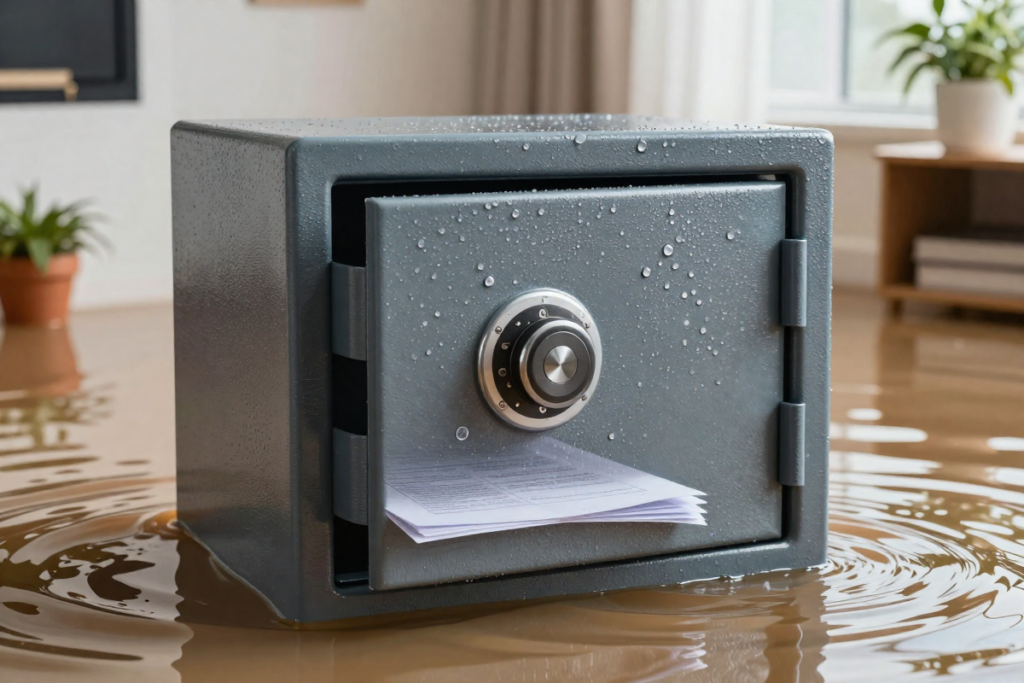
Based on extensive research, customer reviews, and certification standards, here are the best safe storage solutions for different needs and budgets.
Best Overall Home Safe for Documents and Valuables
[PRODUCT OPTION 2: SentrySafe SFW123FUL Fireproof Safe and Waterproof Safe]
The SentrySafe SFW123FUL strikes the perfect balance between protection, capacity, and value for most households.
Key Features:
- Fire Protection: UL-certified 1-hour fire protection at 1700°F
- Water Protection: ETL Verified waterproof for 24 hours in up to 8 inches of water
- Capacity: 1.23 cubic feet—large enough for legal documents, passports, birth certificates, and small valuables
- Security: Dual lock system with programmable electronic keypad and backup key override
- Interior: Adjustable shelf and door organizer for flexible storage
- Weight: Approximately 100 pounds when bolted down
Best For: Families looking for comprehensive fire and water protection with adequate space for important document storage and small valuables like jewelry and hard drives.
Price Range: $$$ (Mid to upper-mid range)
Best Budget Fireproof Document Box
[AFFILIATE PRODUCT PLACEHOLDER: First Alert 2037F Waterproof and Fire-Resistant Chest]
For those on a tighter budget or with minimal storage needs, the First Alert 2037F offers excellent value.
Key Features:
- Fire Protection: UL-rated for 30 minutes at 1550°F
- Water Protection: Submersible protection in up to 6 inches of water
- Capacity: 0.17 cubic feet—ideal for passports, birth certificates, and small documents
- Portability: Compact and lightweight with carrying handle
- Security: Key lock (not as secure as electronic locks but adequate for fire protection)
- Weight: Approximately 15 pounds
Best For: Renters, college students, or homeowners who primarily need fire protection for essential documents and want a portable safe option.
Price Range: $ (Budget-friendly)
Best Biometric & High-Security Home Safe
[PRODUCT OPTION 3: Honeywell 2087F Biometric Digital Steel Security Safe]
For homeowners prioritizing quick access and advanced security, biometric fingerprint safes offer cutting-edge protection.
Key Features:
- Biometric Access: Stores up to 4 fingerprints for quick, keyless entry
- Fire Protection: UL-certified 1-hour fire protection at 1700°F
- Water Protection: Waterproof to ETL standards
- Capacity: 1.1 cubic feet for cash, jewelry, and important documents
- Security: Drop-resistant design with pry-resistant door and anti-drill plates
- Backup Access: Emergency override keys in case of battery failure
Best For: Homeowners who need frequent access to cash, jewelry, or firearms and want the convenience of biometric security.
Price Range: $$$ (Premium pricing)
Best Hidden & Wall Safes for Concealed Protection
[PRODUCT OPTION 4: V-Line Quick Vault In-Wall Safe]
For maximum theft prevention, concealment is key. Wall safes install between studs and can be hidden behind artwork or mirrors.
Key Features:
- Concealment: Installs flush in standard 16-inch stud spacing
- Construction: Heavy-duty steel with continuous weld construction
- Access: Mechanical combination lock or biometric options
- Capacity: Varies by model (typically 0.3-0.8 cubic feet)
- Fire Protection: Limited compared to standalone safes—consider adding fireproof bags for documents
Best For: Homeowners who prioritize theft prevention over fire protection and want discreet storage for jewelry, cash, or firearms.
Price Range: $$ – $$$ (Varies by size and features)
Installation Note: Wall safe installation typically requires cutting drywall and may need professional installation for proper anchoring and concealment.
Installation, Concealment, and Safe Maintenance Tactics
Purchasing a quality home safe is just the first step. Proper installation, placement, and maintenance are critical for maximizing security and longevity.
Where to Put a Safe in Your House for Maximum Security
The best place to hide a safe in your home balances accessibility, concealment, and structural support.
Recommended Locations:
- Master bedroom closet – Private, out of sight from visitors, and typically on a ground floor with strong structural support
- Main floor anchor walls – Interior walls with solid flooring underneath for heavy safes
- Basement utility rooms – Less visible to burglars but ensure adequate water protection if flooding is a risk
Locations to Avoid:
- Garages – Temperature fluctuations can damage electronics; easy access for thieves
- Upper floors – Floor joists may not support heavy safes; increased risk of collapse during fires
- Obvious locations – Master bedroom nightstands or office desk areas are the first places burglars check
How to Bolt a Safe to the Floor at Home
A safe that isn’t anchored can be easily carried away, regardless of weight. Even safes weighing 100+ pounds can be removed with a hand truck or by two determined thieves.
Step-by-Step Anchoring Guide:
- Position the safe in your chosen location, ensuring the door opens fully without obstruction
- Mark the bolt holes using the pre-drilled mounting holes in the safe’s base
- Drill pilot holes using a masonry bit for concrete floors or a standard drill bit for wood subfloors
- Insert anchoring hardware:
- For concrete: Use lag shield anchors or wedge anchors
- For wood: Use heavy-duty lag bolts that penetrate floor joists
- Secure the safe using the provided bolts and washers, tightening until the safe cannot be rocked
- Test stability by attempting to tip or slide the safe
[RECOMMENDED: Heavy-Duty Anchor Bolt Kit for Home Safes]
Fighting the Secret Enemy: Humidity, Mold, and Moisture Control
Here’s an often-overlooked problem: fireproof safes are designed to be airtight, which means they naturally trap humidity inside. Over time, this can lead to:
- Mold growth on paper documents
- Moisture damage to photographs
- Corrosion of metal valuables and jewelry
- Hard drive degradation
Prevention Strategies:
- Use silica gel dehumidifier packs – Replace every 3-6 months or when they change color [ Rechargeable Silica Gel Dehumidifier Packs]
- Store documents in acid-free sleeves – Provides an additional barrier against moisture [ Acid-Free Document Sleeves and Archival Storage]
- Avoid storing damp items – Never place freshly washed jewelry or recently handled documents in your safe without drying them first
- Periodic ventilation – Open your safe monthly for 10-15 minutes to allow air circulation
Battle of the Storage Methods: Home Safe vs. Safe Deposit Box vs. Digital Cloud
Not all valuable documents need to be stored in the same place. Understanding the pros and cons of each storage method helps you create a comprehensive protection strategy.
The Pros and Cons Comparison
| Storage Method | Cost | Accessibility | Theft Security | Disaster Protection |
|---|---|---|---|---|
| Home Safe | One-time purchase ($100-$2,000+) | 24/7 immediate access | Good if bolted & concealed | Excellent if fire/waterproof rated |
| Bank Safe Deposit Box | Annual rental ($50-$300/year) | Bank hours only (limited weekend access) | Excellent institutional security | Excellent (bank-grade vault protection) |
| Encrypted Cloud Storage | Monthly/annual subscription ($5-$20/month) | Anywhere with internet | Digital encryption security | Redundant server backups |
What You Should Never Put in a Bank Safe Deposit Box
While safe deposit boxes offer excellent security, they have significant limitations:
Documents You May Need Urgently:
- Original power of attorney and healthcare directives – May be needed during medical emergencies when banks are closed
- Funeral and burial instructions – Must be accessible immediately upon death
- Passport copies – If you need to travel on short notice over a weekend
Items Banks Prohibit:
- Cash (banks typically don’t allow cash storage in deposit boxes)
- Anything illegal or potentially hazardous
- Items without proof of ownership
Important Note: Safe deposit boxes are not insured by the FDIC. If you store valuables in a deposit box, ensure they’re covered by your homeowners insurance or purchase separate coverage.
The Hybrid Approach: Combining Physical and Encrypted Digital Storage
The smartest approach combines multiple storage methods:
Store at Home (in fireproof/waterproof safe):
- Documents needed frequently (passports, vehicle titles)
- Emergency cash reserves
- Jewelry worn regularly
- Backup hard drives
Store at Bank (in safe deposit box):
- Original estate documents (with copies at home)
- Rare collectibles and high-value items
- Extra copies of critical documents
- Items with purely sentimental value
Store Digitally (encrypted cloud backup):
- Scanned copies of all critical documents
- Digital photos and videos
- Financial records and tax returns
- Password-protected inventory lists
This multi-layered approach ensures that even if one location is compromised, you have backups of essential information.
FAQ Hub: Your Questions About Safe Storage Answered
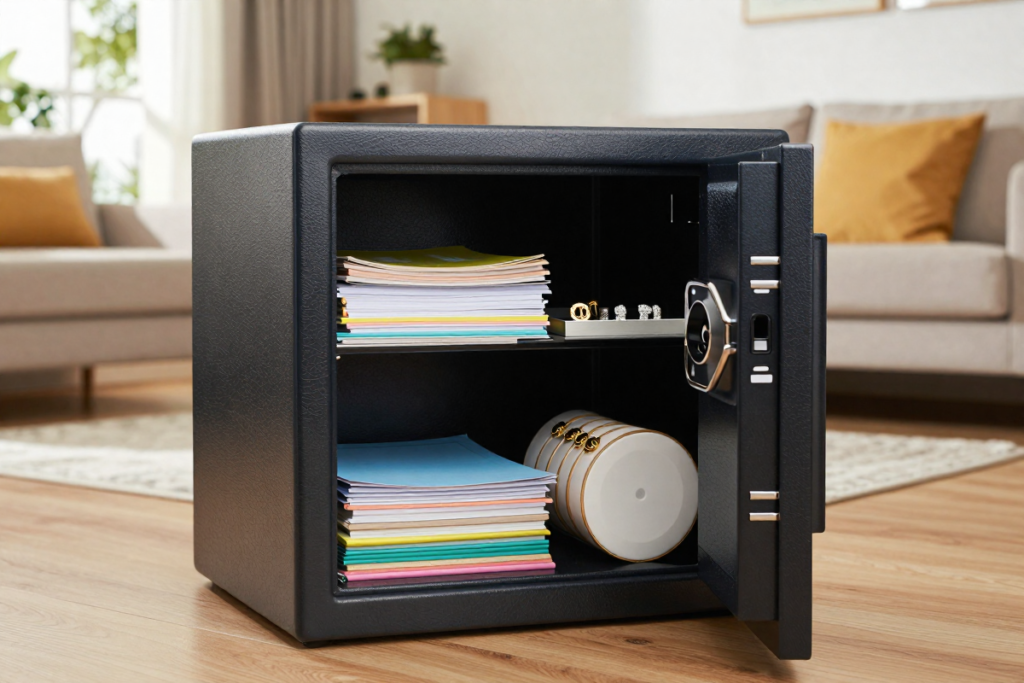
Is a home safe better than a safe deposit box?
It depends on your needs. Home safes offer 24/7 access and are ideal for documents you need frequently, like passports and cash reserves. Safe deposit boxes provide bank-grade security but have limited access hours and can’t be reached during emergencies or weekends. For most households, a hybrid approach—keeping essential documents at home in a fireproof safe and storing rarely-needed originals in a bank deposit box—provides the best protection.
Can I store my passport in a fireproof bag instead of a safe?
Yes, a fireproof document bag can protect your passport from fires, but it offers no theft protection. Fireproof bags are excellent supplementary storage for evacuation scenarios—keep one with essential documents near an exit. However, for everyday storage, a fireproof and waterproof safe provides superior protection against both disasters and theft.
Can a standard gun safe be used to store important paper documents?
Not without precautions. Most gun safes are designed primarily for theft prevention, not fire protection. They typically lack the interior fire-resistant lining found in document safes. If you’re using a gun safe for documents, verify it has:
- A UL Class 350 fire rating for paper protection
- Adequate interior lining (not just external fire resistance)
- Humidity control, as gun safes often trap moisture
Consider adding fireproof document boxes inside your gun safe for added protection.
What should I do if I forget the combination or the electronic battery dies?
Most quality digital safes include:
- Emergency override keys – Keep these in a separate secure location (not inside the safe!)
- External battery terminals – Allow you to connect a 9V battery to power the keypad temporarily
- Master reset procedures – Contact the manufacturer for reset instructions with proof of purchase
For mechanical combination locks, you’ll need to contact a professional locksmith or the safe manufacturer for assistance.
Will a fireproof safe survive a direct house fire if it isn’t bolted down?
Yes—if it’s UL-rated and the fire doesn’t exceed the safe’s protection duration. However, there are two critical risks:
- Falling through floors – During structure collapse, an unanchored safe could fall to lower levels, potentially compromising seals and allowing fire/water intrusion
- Theft during evacuation – Thieves sometimes target homes during or immediately after fires, and an unanchored safe can be easily removed
Always bolt your safe to the floor or wall for maximum protection.
Conclusion & Final Recommendations
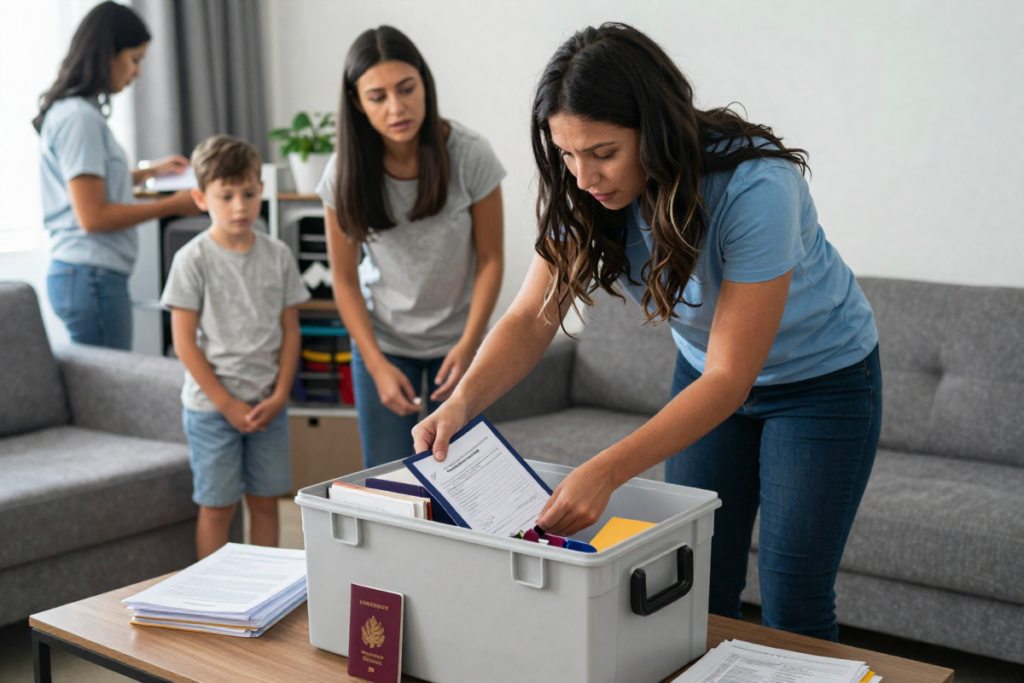
Safeguarding your personal identity documents, legal papers, and hard-earned assets requires proactive planning—not reactive scrambling after disaster strikes. The peace of mind that comes from knowing your most critical documents are protected from fire, water, and theft is invaluable.
Key Takeaways:
- Assess your needs first – Make a complete inventory of what requires protection before shopping
- Prioritize certifications – Look for UL Class 350 fire ratings and ETL waterproof verification
- Size matters – Choose a safe that allows room for future document accumulation
- Anchor properly – Even heavy safes must be bolted to floors or walls
- Control humidity – Use dehumidifier packs and acid-free sleeves to prevent moisture damage
- Create redundancy – Combine home safes with bank deposit boxes and digital cloud backups
Ready to Protect What Matters Most?
Don’t wait for a disaster to expose the gaps in your home security setup. Evaluate the volume of items you need to protect, determine your budget, and invest in a high-quality, certified fireproof and waterproof safe today.
Whether you choose a budget-friendly locking document box for essential paperwork or a premium biometric safe for valuable jewelry and cash, taking action now provides ultimate peace of mind for years to come.
Related Articles You May Find Helpful:
- Best Home Security Systems of 2026: Expert Reviews & Buying Guide
- Emergency Preparedness Budget: How to Plan, Save, and Stay Ready
PRODUCT CHECKLIST (Everything Featured In Article)
SentrySafe SFW123FUL Fireproof Safe and Waterproof Safe
First Alert 2037F Waterproof and Fire-Resistant Chest
Honeywell 2087F Biometric Digital Steel Security Safe
V-Line Quick Vault In-Wall Safe
Heavy-Duty Anchor Bolt Kit for Home Safes
Rechargeable Silica Gel Dehumidifier Packs
Acid-Free Document Sleeves and Archival Storage
Disclaimer: Links in this post may contain an affiliate link. If you purchase through these links I may earn a commission from the sale at no extra cost to you.
No Responses